All Dyes

All Dyes is the single product list for the Fluorescent Dyes, Probes & Stains section. Many dyes here have no application or dye-family subcategory, so the list is the broadest way to browse the range. It suits searches by product name when the required dye is already known. Examples range from the near-infrared cyanine indocyanine green and the ratiometric calcium indicator Fura-2 pentapotassium to the nucleic acid stains Hoechst 33258 trihydrochloride and SYBR Green II. Classical stains such as hematoxylin, reactive labeling dyes and enzyme substrates are listed alongside them. For selection by task or by core structure, the parent Fluorescent Dyes, Probes & Stains page groups dyes by application and dye family.

Items 2001-2025 of 2505

  • N-Didesmethyl Loperamide
    Cat. No.
    A70761

    N-Didesmethyl Loperamide

    Synonyms: R 21345

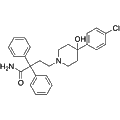
    N-Didesmethyl Loperamide is a metabolite of Loperamide and serves as an innovative PET radiotracer specifically designed for visualizing P-glycoprotein (P-gp) function in vivo. This compound contributes to the understanding of drug transport mechanisms and can enhance insights into multidrug resistance in various diseases, particularly in cancer research. Its application in PET imaging provides valuable information for both pharmacological studies and the development of therapeutic strategies targeting P-gp.

    1 mg
    $315.00
    All 1 sizes
  • Biliverdin hydrochloride
    Cat. No.
    A71215

    Biliverdin hydrochloride

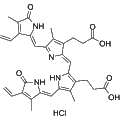
    Biliverdin hydrochloride is a tetrapyrrolic pigment involved in the catabolism of heme. This compound serves as a precursor to bilirubin through the action of biliverdin reductase and has been identified as possessing anti-mutagenic, antioxidant, anti-inflammatory, and immunosuppressive properties. Its diverse biological activities make biliverdin hydrochloride valuable for research applications in oxidative stress, cellular signaling, and inflammation studies.

    2 mg
    $35.00
    5 mg
    $50.00
    All 4 sizes
  • Coprostanol
    Cat. No.
    A71330

    Coprostanol

    Synonyms: 5β-Cholestan-3β-ol

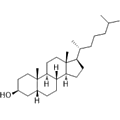
    Coprostanol, also known as 5β-Cholestan-3β-ol, is an indicator sterol that forms through the microbial reduction of cholesterol in the intestines of humans and higher animals. It serves as a valuable marker for assessing fecal pollution in water resources, particularly in relation to sewage discharges. Additionally, coprostanol may act as a potential biological indicator for conditions such as cerebral chondrodystrophy (CTX), making it relevant for various environmental and biomedical research applications.

    5 mg
    $150.00
    10 mg
    $275.00
    All 5 sizes
  • Flavokermesic acid
    Cat. No.
    A71840

    Flavokermesic acid

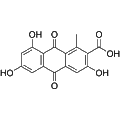
    Flavokermesic acid is an anthraquinone dye primarily found in extracts of the Diaspididae family of insects. It serves as a valuable tool for studying the biosynthetic pathways associated with insect-derived anthraquinone pigments, contributing to insights into pigment production and its biological significance. This compound is utilized in various research applications focused on natural product chemistry and insect biology.

    1 mg
    $175.00
    5 mg
    $450.00
    All 2 sizes
  • Sulforhodamine 101 DHPE
    Cat. No.
    A72492

    Sulforhodamine 101 DHPE

    Sulforhodamine 101 DHPE is a fluorescent probe that targets endogenous metabolites through its unique conjugation of the phospholipid 1,2-dipalmitoyl-sn-glycero-3-PE with sulforhodamine 101, a red fluorescent dye exhibiting excitation/emission maxima of 586/605 nm. This reagent is well-suited for applications including imaging of solid-supported lipid bilayers, detection of protein-ligand interactions on bilayer surfaces, and monitoring the colocalization of lipid probes in liposomes using resonance energy transfer (RET) techniques. Its ability to integrate into phospholipid bilayers enhances its utility in membrane biophysics research.

    1 mg
    $340.00
    All 1 sizes
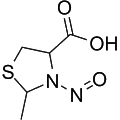
  • NMTCA
    Cat. No.
    A72877

    NMTCA

    Synonyms: NMTPRO; N-Nitroso-2-methylthiazolidine 4-carboxylic acid; N-nitrosomethylthioproline

    NMTCA (N-methyl-N'-thiocarbamoyl-L-arginine) is a sulfur-containing N-nitrosamino acid that serves as an indicator of endogenous nitrosation. Its primary application includes the assessment of nitrosation levels through gas chromatography-thermal energy analysis. NMTCA is valuable in biochemical research for studying the effects of nitrosative stress and related biological processes.

    10 mg
    $170.00
    25 mg
    $365.00
    All 4 sizes
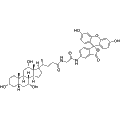
  • Cholylglycylamidofluorescein
    Cat. No.
    A73431

    Cholylglycylamidofluorescein

    Synonyms: CGamF

    Cholylglycylamidofluorescein (CGamF) is a fluorescent probe designed to study hepatic bile acid transport mechanisms. This compound is composed of cholic acid linked through a glycylamino bond to fluorescein, offering a fluorescence excitation/emission maxima at 492/515 nm in aqueous solutions. CGamF is utilized in research applications involving bile acid metabolism and transport processes within liver cells, enabling in-depth studies of hepatic function and pathology.

    1 mg
    $1,070.00
    5 mg
    $1,170.00
    All 5 sizes
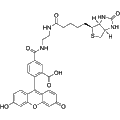
  • Biotin (5-fluorescein) conjugate
    Cat. No.
    A74214

    Biotin (5-fluorescein) conjugate

    Synonyms: N-(Fluorescein-5-carbamidoethyl)biotinamide

    Biotin (5-fluorescein) conjugate is a fluorescently labeled biotin derivative designed for effective cell labeling. This compound exhibits high biological activity in detecting and localizing target molecules in various biomedical research applications. It is particularly useful in immunofluorescence staining experiments, enhancing both sensitivity and specificity in the visualization of biomolecular interactions.

    Out of stock

    All 3 sizes
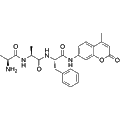
  • Ala-Ala-Phe-AMC
    Cat. No.
    A74254

    Ala-Ala-Phe-AMC

    Ala-Ala-Phe-AMC is a fluorogenic substrate primarily used for the detection of proteolytic activity. Its positively charged characteristics enhance its suitability for various biochemical assays, enabling researchers to investigate protease function in biological samples. This compound is valuable in studies related to protein turnover, cellular signaling, and disease mechanisms involving proteolysis.

    5 mg
    $100.00
    10 mg
    $160.00
    All 3 sizes
  • PDAM
    Cat. No.
    A74389

    PDAM

    Synonyms: 1-Pyrenyldiazomethane

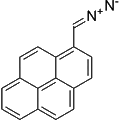
    PDAM (1-Pyrenyldiazomethane) is a fluorescent dye known for its strong biomarker properties and fluorescence activity. It is utilized in cell imaging for histological studies, allowing for clear delineation of specific cell structures. Additionally, PDAM serves as a hematological stain, enhancing the visualization of cellular components to facilitate more accurate diagnoses in various research applications.

    Out of stock

    All 3 sizes
  • Boc-Ile-Glu-Gly-Arg-AMC
    Cat. No.
    A74701

    Boc-Ile-Glu-Gly-Arg-AMC

    Synonyms: IEGR-AMC

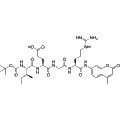
    Boc-Ile-Glu-Gly-Arg-AMC is a fluorogenic peptide substrate specifically designed for the activated factor X (FXa). This compound exhibits key biological activity by enabling the quantification of FXa in various biological assays. It is particularly useful in research applications focused on coagulation, thrombin generation, and related hemostatic studies.

    5 mg
    $90.00
    10 mg
    $150.00
    All 2 sizes
  • HB-230
    Cat. No.
    A74990

    HB-230

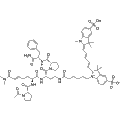
    HB-230 is a red fluorescent probe designed specifically for transglutaminase 2 (TG2). It effectively binds to TG2 and α2-macroglobulin through the LRP1 pathway, facilitating efficient endocytosis. HB-230 exhibits excitation and emission wavelengths of 649 nm and 665 nm, respectively, making it suitable for imaging applications in studies involving TG2. This reagent is valuable for researchers investigating cellular processes associated with TG2 activity.

    0.1 mg
    $585.00
    All 1 sizes
  • 4-Methylumbelliferyl β-D-Glucopyranoside
    Cat. No.
    A75029

    4-Methylumbelliferyl β-D-Glucopyranoside

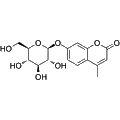
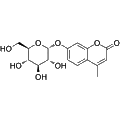
    4-Methylumbelliferyl β-D-Glucopyranoside serves as a fluorogenic substrate specifically for β-glucosidase, facilitating the measurement of β-glucosidase activity in various biological assays. Upon enzymatic cleavage, it releases 4-methylumbelliferone, a highly fluorescent compound with an emission maximum between 445-454 nm. The excitation wavelength of 4-methylumbelliferone is influenced by pH, showing peaks at 330, 370, and 385 nm at pH 4.6, 7.4, and 10.4, respectively, making it a valuable tool for studying enzyme kinetics and related research applications.

    50 mg
    $20.00
    100 mg
    $30.00
    All 5 sizes
  • 4-Methylumbelliferyl-α-D-Glucopyranoside
    Cat. No.
    A75051

    4-Methylumbelliferyl-α-D-Glucopyranoside

    Synonyms: 4-Methylumbelliferyl-α-D-Glucose; 4-Methylumbelliferyl-α-D-Glucoside; 4-MU-α-D-Glucopyranoside

    4-Methylumbelliferyl-α-D-Glucopyranoside is a fluorescent substrate targeting α-glucosidase, which releases the fluorescent moiety 4-methylumbelliferyl (4-MU) upon enzymatic cleavage. This compound exhibits pH-dependent fluorescence, with excitation wavelengths of 320 nm in acidic conditions and 360 nm in alkaline conditions, while its emission increases between 445-455 nm as pH decreases. 4-Methylumbelliferyl-α-D-Glucopyranoside serves as a valuable biomarker for assessing α-glucosidase activity in infant blood spot samples, particularly in the context of Fabry and Pompe diseases.

    5 mg
    $20.00
    10 mg
    $25.00
    All 5 sizes
  • NIR-BG2
    Cat. No.
    A75144

    NIR-BG2

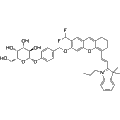
    NIR-BG2 is a near-infrared fluorescent probe that selectively targets senescence-associated β-galactosidase (SA-β-Gal). Upon activation by SA-β-Gal, NIR-BG2 undergoes hydrolysis to release an electrophilic quinone methide, which covalently labels surrounding proteins, resulting in a 16-fold increase in fluorescence intensity at 709 nm. This compound is valuable for in vivo imaging studies focused on cellular senescence, enabling researchers to visualize senescent cells effectively.

    Out of stock

    All 3 sizes
  • Naphthofluorescein
    Cat. No.
    A75532

    Naphthofluorescein

    Synonyms: Naphthafluorescein

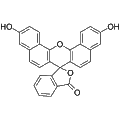
    Naphthofluorescein is a potent inhibitor of HIF-1 through the inhibition of HIF prolyl-hydroxylase activity. It effectively suppresses Mint3-dependent HIF-1 signaling and glycolytic activity in cancer cells and macrophages while exhibiting low cytotoxicity in vitro and negligible adverse effects in vivo. Additionally, Naphthofluorescein serves as a fluorescent pH-sensitive probe, making it suitable for functional Cerenkov imaging applications.

    5 mg
    $20.00
    10 mg
    $30.00
    All 5 sizes
  • 18:1 Liss Rhod PE
    Cat. No.
    A75988

    18:1 Liss Rhod PE

    Synonyms: 18:1 Lissamine rhodamine PE

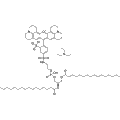
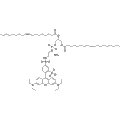
    18:1 Liss Rhod PE is a fluorescent phospholipid used as a fluorescent probe. It is highly effective for monitoring dip-pen nanolithography-generated structures through fluorescence microscopy, facilitating large-scale imaging of phospholipid inks. Additionally, 18:1 Liss Rhod PE exhibits phase separation and self-quenching behavior under specific conditions in thin lipid membrane stacks, making it valuable for studies of membrane dynamics and organization.

    1 mg
    $280.00
    5 mg
    $800.00
    All 2 sizes
  • FITC-GW3965
    Cat. No.
    A76532

    FITC-GW3965

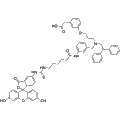
    FITC-GW3965 is a fluorescence-labeled agonist of liver X receptor beta (LXRβ), designed to facilitate the study of LXRβ functions in biological systems. The compound is synthesized by replacing the trifluoromethyl group of GW3965 with an amide linkage to incorporate the FITC dye. FITC-GW3965 is valuable for research applications involving the exploration of lipid metabolism, cholesterol homeostasis, and gene regulation mediated by LXRβ.

    5 mg
    $610.00
    10 mg
    $1,000.00
    All 4 sizes
  • (S)-DO271
    Cat. No.
    A76550

    (S)-DO271

    (S)-DO271 is a non-active control probe designed for targeting Abhydrolase Domain Containing 12 (ABHD12), exhibiting minimal inhibitory activity with an IC50 greater than 100 μM. This compound shows no cytotoxic effects and does not induce the upregulation of inflammatory factors, making it an effective negative control for validating functional studies of ABHD12. Its use is critical in distinguishing specific activity in ABHD12-related research applications.

    0.5 mg
    $90.00
    1 mg
    $160.00
    All 3 sizes
  • 7-Hydroxycoumarinyl arachidonate
    Cat. No.
    A76554

    7-Hydroxycoumarinyl arachidonate

    Synonyms: 7-HCA; Umbelliferyl Arachidonate; 7-HC-arachidonate

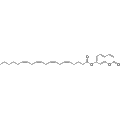
    7-Hydroxycoumarinyl arachidonate is a fluorogenic substrate for cytosolic phospholipase A2 (PLA2) and monoacylglycerol lipase (MAGL). Upon hydrolysis, it generates arachidonic acid (AA) and the highly fluorescent product 7-hydroxyl coumarin (7-HC). The production of 7-HC can be quantitatively assessed using a fluorometer, making this compound valuable for studies investigating the enzymatic activity of PLA2 and MAGL in various biological contexts.

    Out of stock

    All 3 sizes
  • Ac-LVSR-AMC
    Cat. No.
    A76593

    Ac-LVSR-AMC

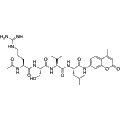
    Ac-LVSR-AMC is a tetrapeptide fluorescent substrate designed to quantitatively assess the specific activity of Malt1 protease in vitro. This compound serves as a valuable tool for studying proteolytic processes and Malt1-related signaling pathways. Its fluorogenic properties enable sensitive detection, making it suitable for applications in biochemical assays and research on immune responses.

    Out of stock

    All 3 sizes
  • Coumarin–quinone conjugate
    Cat. No.
    A76727

    Coumarin–quinone conjugate

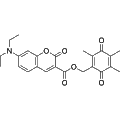
    Coumarin-quinone conjugate acts as a fluorescent substrate specifically for NADH:ubiquinone oxidoreductases, featuring a coumarin fluorophore linked to a ubiquinone analog. This reagent facilitates the measurement of kinetic parameters for AIFM2/FSP1, making it valuable in research focused on ferroptosis and related metabolic processes. Its fluorescent properties enhance detection sensitivity in various biochemical assays.

    0.5 mg
    $215.00
    1 mg
    $405.00
    All 2 sizes
  • Mca-PLAQAV-Dpa-RSSSR-NH2
    Cat. No.
    A76832

    Mca-PLAQAV-Dpa-RSSSR-NH2

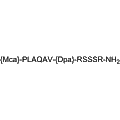
    Mca-PLAQAV-Dpa-RSSSR-NH2 is a fluorescent peptide designed as a substrate for TNF-α converting enzyme (TACE; ADAM17), ADAM9, and ADAM10. This peptide utilizes fluorescence resonance energy transfer to monitor enzymatic activity, enabling quantification through changes in fluorescence intensity. It is a valuable tool for studying the roles of these metalloproteinases in various biological processes and may facilitate research in cancer biology and inflammatory diseases.

    5 mg
    $190.00
    10 mg
    $310.00
    All 2 sizes
  • TNO211
    Cat. No.
    A76865

    TNO211

    Synonyms: Dabcyl-GABA-Pro-Gln-Gly-Leu-Glu(EDANS)-Ala-Lys-NH2

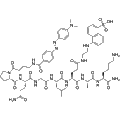
    TNO211 is a fluorogenic substrate designed for the specific detection of matrix metalloproteinase (MMP) activity. It contains a cleavable Gly-Leu bond, allowing for the precise identification of MMPs, and features a fluorophore/quencher pair consisting of EDANS and Dabcyl. This reagent operates optimally at excitation/emission wavelengths of 340/485 nm, making it suitable for various applications in biochemical and molecular biology research focused on MMP functions.

    Out of stock

    All 3 sizes
  • Dnp-PYAYWMR
    Cat. No.
    A76869

    Dnp-PYAYWMR

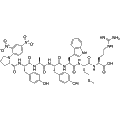
    Dnp-PYAYWMR is a peptide substrate specifically designed to target matrix metalloproteinase 3 (MMP3). Upon cleavage by MMP3, it produces Dnp-PYA, which is nonfluorescent, and YWMR, a fluorophore detectable at 360 nm. This reagent is ideal for assessing MMP3 activity in biochemical assays, with fluorescence intensity measured at excitation/emission wavelengths of 328/350 nm following a 2-hour incubation period.

    Out of stock

    All 3 sizes

Items 2001-2025 of 2505

Added to your cart

View Cart Checkout

    Loading...