- Cat. No.
- A20339
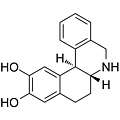
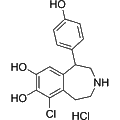
(+)-Dihydrexidine hydrochloride
Synonyms: (+)-DAR-0100 (hydrochloride)
(+)-Dihydrexidine hydrochloride ((+)-DAR-0100 hydrochloride) is a dopamine D1 receptor agonist with an EC50 of 72± 21 nM.
Search by product name, CAS, target or catalog number. Press Down Arrow to reach product suggestions, Tab to move between links, and Escape to close suggestions.
Dopamine receptor agonists and antagonists act on the five G protein-coupled receptors that respond to dopamine. The receptors form two groups, with D1 and D5 in the D1-like class and D2, D3 and D4 in the D2-like class. D1-like receptors stimulate adenylyl cyclase, whereas D2-like receptors inhibit it and lower cyclic adenosine monophosphate (cAMP) levels. Dopamine signaling controls movement, reward, motivation and hormone release, and is studied in Parkinson's disease and psychiatric research. Ligands here include the agonist rotigotine HCl, the D2 antagonists L-741626 and domperidone, and the D3-preferring ligand BP897.
Synonyms: (+)-DAR-0100 (hydrochloride)
(+)-Dihydrexidine hydrochloride ((+)-DAR-0100 hydrochloride) is a dopamine D1 receptor agonist with an EC50 of 72± 21 nM.
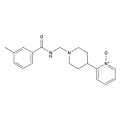
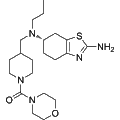
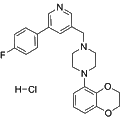
ABT-670 is a selective, oral bioavailable agonist of dopamine D4 receptor, with EC50 of 89 nM, 160 nM, and 93 nM for human?D4, ferret?D4, and rat D4, respectively.
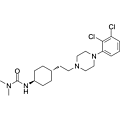
Synonyms: RGH-188
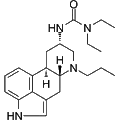
Cariprazine is a novel antipsychotic drug candidate that exhibits high affinity for the D3 (Ki=0.085 nM) and D2 (Ki=0.49 nM) receptors, and moderate affinity for the 5-HT1A receptor (Ki=2.6 nM).
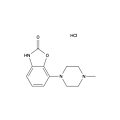
Synonyms: SLV-308 hydrochloride; SLV308; DU-126891 hydrochloride; DU 126891
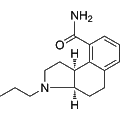
Pardoprunox hydrochloride is a novel partial dopamine D2 and D3 receptor agonist and serotonin 5-HT1A receptor agonist, D2 (pKi = 8.1) and D3 receptor (pKi = 8.6) partial agonist and 5-HT1A receptor (pKi = 8.5) full agonist.
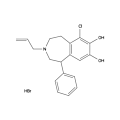
Synonyms: SKF82958; Chloro-APB hydrobromide
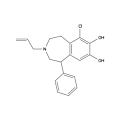
SKF-82958 hydrobromide is a D1/D5 receptor full agonist.
Synonyms: Chloro-AP
SKF 82958 is a D1/D5 receptor full agonist.
Synonyms: DAR-0100
Dihydrexidine (DAR-0100) is a high potent, selective and full efficacy D1-like dopamine receptor (D1/D5) agonist with an IC50 of 10 nM for D1 receptor. Dihydrexidine exhibits potent antiparkinsonian activity.
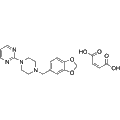
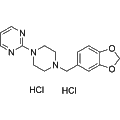
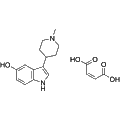
Piribedil maleate is a potent agonist of dopamine D2 and D3 receptors, with additional activity as an α2-adrenoceptor antagonist. It has been shown to inhibit MLL1 methyltransferase activity with an EC50 of 0.18 μM. Piribedil maleate is of interest for research applications related to Parkinson’s disease, circulatory disorders, and various cancers.
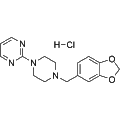
Piribedil hydrochloride is a potent agonist of dopamine D2 and D3 receptors, serving as a valuable tool for investigating dopaminergic signaling pathways. In addition to its agonistic activity, it acts as an antagonist at α2-adrenoceptors and inhibits MLL1 methyltransferase with an EC50 of 0.18 μM. This compound is primarily utilized in research related to Parkinson's disease, circulatory disorders, and certain types of cancer, making it an important reagent for studies focused on neurodegeneration and tumor biology.
Piribedil dihydrochloride is a potent dopamine D2 and D3 agonist, also functioning as an antagonist at α2-adrenoceptors. This compound exhibits inhibitory activity on MLL1 methyltransferase with an EC50 of 0.18 μM. It is primarily utilized in research focused on Parkinson's disease, circulatory disorders, and various types of cancers.
Synonyms: EMD 128130 dihydrochloride
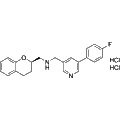
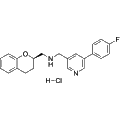
Sarizotan dihydrochloride is a potent agonist of the serotonin 5-HT1A receptor and dopamine receptors. It demonstrates strong activity with IC50 values of 6.5 nM for rat 5-HT1A, 0.1 nM for human 5-HT1A, 15.1 nM for rat D2, 17 nM for human D2, 6.8 nM for human D3, and 2.4 nM for human D4.2. Sarizotan dihydrochloride is utilized in research to explore neuropharmacology, behavior, and potential therapeutic effects on psychiatric disorders.
D2R/D3R/5-HT1AR agonist 1 is an orally active compound that selectively targets dopamine receptors D2R and D3R, as well as the serotonin receptor 5-HT1AR, exhibiting EC50 values of 1.29 nM, 1.05 nM, and 153.5 nM, respectively. This compound has demonstrated efficacy in alleviating behavioral disorders induced by MPTP and possesses anti-depressant properties. D2R/D3R/5-HT1AR agonist 1 is valuable for research in the fields of Parkinson's disease and depression, aiding in the exploration of potential therapeutic interventions.
Out of stock
All 3 sizes
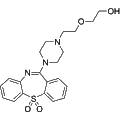
Quetiapine sulfone is a primary metabolite of Quetiapine, acting predominantly as a serotonin (5-HT) receptor agonist and a dopamine receptor antagonist. This compound is essential for studying the pharmacokinetics and efficacy of Quetiapine in various neurological disorders, including schizophrenia and bipolar disorder. Its role in modulating neurotransmitter systems makes it a valuable reagent for researchers exploring antipsychotic mechanisms and drug metabolism.
Out of stock
All 3 sizes
BRL 54443 maleate is a potent agonist of the 5-HT1E and 5-HT1F receptors, exhibiting Ki values of 1.1 nM and 0.7 nM, respectively. This compound demonstrates over 30-fold selectivity against other serotonin and dopamine receptors, making it a valuable tool in the study of serotonergic signaling pathways. BRL 54443 maleate is primarily used in research applications focused on anxiety, depression, and other neuropsychiatric disorders where 5-HT receptor modulation is implicated.
Out of stock
All 3 sizes
Synonyms: EMD 128130 hydrochloride
Sarizotan hydrochloride is a potent agonist of the serotonin 5-HT1A receptor and dopamine receptors D2, D3, and D4. It demonstrates high affinity with IC50 values of 0.1 nM for human 5-HT1A, 15.1 nM for rat D2, and 2.4 nM for human D4.2, among others. This compound is primarily utilized in neurological research and pharmacological studies, particularly in the exploration of psychopharmacological interventions and the modulation of serotonergic and dopaminergic pathways.
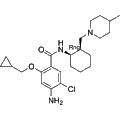
Lirexapride is an agonist of the 5-HT4 and Dopamine D2 receptors. It is primarily known for its stimulatory effects on gastrointestinal motility, making it a valuable tool for researching digestive system disorders. This compound facilitates the study of gastroenterological conditions and the mechanisms underlying gut health and function.
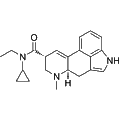
ECPLA is a highly potent 5-HT2A agonist, exhibiting an EC50 value of 14.6 nM for Gq-mediated calcium signaling. As an analog of lysergic acid diethylamide (LSD), it demonstrates significant affinity for various serotonin receptors, α2-adrenoceptors, and D2-like dopamine receptors. ECPLA is valuable for research applications focused on neuropharmacology, receptor signaling pathways, and the exploration of serotonin-related mechanisms.
Synonyms: N-0437
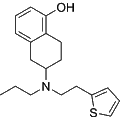
(Rac)-Rotigotine serves as a dopamine D2 receptor agonist, exhibiting a multifaceted mechanism of action. It is recognized as a full agonist at dopamine receptors and a partial agonist at the 5-HT1A receptor, while also functioning as an antagonist of the α2B-adrenergic receptor, demonstrating Ki values of 0.71 nM for dopamine D3 and 4-15 nM for D2, D5, D4, and dopamine D1 receptors. This compound is primarily utilized in research focused on neurological disorders, particularly in the context of Parkinson's disease and other dopamine-related pathologies.
Synonyms: SLV313 hydrochloride
Adoprazine hydrochloride functions as a full agonist at the 5-HT1A receptor, demonstrating a high affinity with a pEC50 of 9 in cloned human receptors. Additionally, it acts as a full antagonist at D2 and D3 receptors, with pA2 values of 9.3 and 8.9, respectively. This compound showcases properties characteristic of atypical antipsychotics, making it relevant for research in neuropharmacology and the treatment of psychiatric disorders.
U 93385 is a selective agonist of the 5-HT₁A receptor, primarily involved in neurotransmission modulation. This compound does not exhibit significant activity at α₂ adrenergic or D₂ dopamine receptors, making it suitable for specific studies targeting the 5-HT₁A pathway. U 93385 has been shown to influence heart rate by stimulating the vagus nerve, leading to bradycardia. This makes it a valuable tool for investigating the mechanisms underlying 5-HT₁A receptor-mediated vagal nerve tolerance.
SDZ 208-912 is a dual-action compound functioning as a 5-HT1A/2 receptor agonist and a dopamine D1 receptor antagonist. It demonstrates partial dopamine agonism along with atypical neurosedative effects in rodent models. This reagent is valuable for investigating neurological disorders, particularly in the context of schizophrenia research.
Out of stock
All 3 sizes
Synonyms: SKF 82526 hydrochloride
Fenoldopam hydrochloride is a potent D1 receptor agonist that also functions as a lysine-specific demethylase 1 (LSD1) inhibitor, with an IC50 of 0.8974 μM. This compound exhibits significant anti-hypertensive properties and has demonstrated efficacy in inhibiting cancer cell proliferation while inducing apoptosis. Fenoldopam hydrochloride is valuable in research applications focused on cardiovascular effects and oncology studies related to dysregulated epigenetic mechanisms.
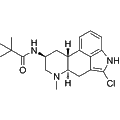
Proterguride is a potent agonist of dopamine receptors, demonstrating significant potential in modulating dopaminergic signaling. Additionally, it exhibits antagonistic activity at the histamine H(1) receptor and alpha(1)-adrenoceptor, while also partially activating serotonergic 5-HT2A/B receptors. This compound is valuable for research focused on neurological diseases, including Parkinson's disease, providing insights into dopaminergic mechanisms and receptor interactions.
Out of stock
All 3 sizes
Synonyms: (-)-Apomorphine
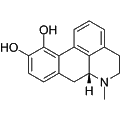
Apomorphine is a potent dopamine receptor agonist with additional inhibitory effects on monoamine oxidases A and B. It demonstrates neuroprotective properties, evidenced by its ability to reduce reactive oxygen species production, inhibit DNA fragmentation, and downregulate JNK and ERK1/2 phosphorylation. Apomorphine also facilitates the degradation of intracellular Aβ40 and Aβ42, lowers tau protein levels, and suppresses MMP-9 expression. Its radical scavenging and iron chelating capabilities make it valuable for research in neurodegenerative conditions such as Alzheimer's disease and Parkinson's disease, as well as studies related to breast carcinoma and erectile dysfunction.
Synonyms: FCE-21336 diphosphate
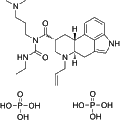
Cabergoline diphosphate is an ergot alkaloid that acts as an agonist of dopamine D2-like receptors, demonstrating high affinity for D2, D3, and 5-HT2B receptors with Ki values of 0.7, 1.5, and 1.2, respectively. It serves as an autophagy inducer, making it a valuable tool for research focused on cellular processes related to autophagy and neurobiology. This compound is instrumental in studies investigating neurodegenerative diseases and metabolic regulation, providing insights into the role of dopamine receptors in cellular homeostasis.