
- Cat. No.
- A10125
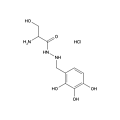
Benserazide HCl (Serazide)
Synonyms: Ro 4-4602; Serazide
Benserazid hydrochloride is an inhibitor of L-aromatic amino acid decarboxylase.
In stock
View Details
Search by product name, CAS, target or catalog number. Press Down Arrow to reach product suggestions, Tab to move between links, and Escape to close suggestions.
Decarboxylase inhibitors block enzymes that remove a carboxyl group from amino acids and related metabolites. Ornithine decarboxylase (ODC) forms putrescine in the first step of polyamine synthesis. Eflornithine hydrochloride hydrate inhibits ODC irreversibly, whereas sardomozide blocks S-adenosylmethionine decarboxylase (SAMDC), a second enzyme of the polyamine pathway. Carbidopa and benserazide inhibit aromatic L-amino acid decarboxylase (AADC), which converts levodopa to dopamine. TES-991 and TES-1025 inhibit aminocarboxymuconate semialdehyde decarboxylase (ACMSD) in the tryptophan pathway. A 2018 study showed that ACMSD inhibition increases de novo synthesis of nicotinamide adenine dinucleotide (NAD+). Together, these compounds serve studies of polyamine, catecholamine and NAD+ metabolism.
Synonyms: Ro 4-4602; Serazide
Benserazid hydrochloride is an inhibitor of L-aromatic amino acid decarboxylase.
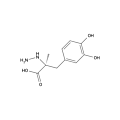
Synonyms: Lodosyn
Carbidopa inhibits aromatic-L-amino-acid decarboxylase, an enzyme important in the biosynthesis of L-tryptophan to serotonin and in the biosynthesis of L-DOPA to Dopamine (DA).
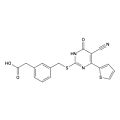
TES-1025 is a potent and selective human α-amino-β-carboxymuconate-ε-semialdehyde decarboxylase (ACMSD) inhibitor with an IC50 of 13±3 nM.
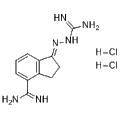
Synonyms: CGP-48664; SAM486A
Sardomozide is a second-generation polyamine synthesis inhibitor, which inhibits the activity of the polyamine biosynthetic enzyme S-adenosylmethionine decarboxylase (SAMDC).
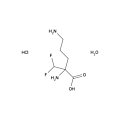
Synonyms: Difluoromethylornithine hydrochloride hydrate
Eflornithine hydrochloride, hydrate is a drug found to be effective in the treatment of facial hirsutism.
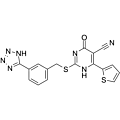
TES-991 is a potent and selective human α?Amino-β-carboxymuconate-ε-semialdehyde Decarboxylase (ACMSD) inhibitor, with an IC50 of 3 nM.

1,3-Diaminopropane, a three carbon diamine, is an ornithine decarboxylase inhibitor.
Synonyms: CGP 48664; SAM-486A
Sardomozide is an S-adenosylmethionine decarboxylase (SAMDC) inhibitor with an IC50 of 5 nM.
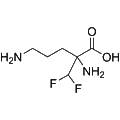
Synonyms: DFMO; MDL71782; RMI71782; α-difluoromethylornithine
Eflornithine is a selective, irreversible inhibitor of the enzyme ornithine decarboxylase. This compound demonstrates significant biological activity in the treatment of African trypanosomiasis, also known as sleeping sickness, as well as in managing excessive facial hair growth in women. Its ability to modulate polyamine synthesis makes it a valuable reagent in research related to cancer biology and dermatological studies.
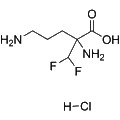
Synonyms: DFMO hydrochloride; MDL71782 hydrochloride; RMI71782 hydrochloride; α-difluoromethylornithine hydrochloride
Eflornithine hydrochloride is a selective and irreversible inhibitor of ornithine decarboxylase, an enzyme implicated in polyamine metabolism. This compound demonstrates significant biological activity in inhibiting cell proliferation and is utilized in research related to African trypanosomiasis and the management of excessive facial hair growth in women. Its mechanism of action makes it a valuable tool in studies examining cellular growth regulation and therapeutic interventions for related disorders.
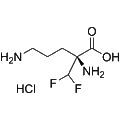
Synonyms: L-DFMO monohydrochloride; L-RMI71782 monohydrochloride; L-α-difluoromethylornithine monohydrochloride
L-Eflornithine monohydrochloride is an irreversible inhibitor of ornithine decarboxylase (ODC), demonstrating a dissociation constant (KD) of 1.3±0.3 µM and a rate constant for inactivation (Kinact) of 0.15±0.03 min-1. This compound effectively inhibits polyamine synthesis, making it valuable for studying cellular proliferation and differentiation processes. L-Eflornithine is utilized in various research applications, including cancer biology and neurobiology, providing insights into the role of polyamines in cellular metabolism and growth regulation.
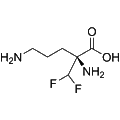
Synonyms: L-DFMO; L-RMI71782; L-α-difluoromethylornithine
L-Eflornithine is an irreversible inhibitor of ornithine decarboxylase (ODC), with a dissociation constant (KD) of 1.3±0.3 µM and a rate of inactivation (Kinact) of 0.15±0.03 min-1. This compound is primarily utilized in research to study polyamine metabolism and its implications in various cellular processes. It has significant applications in cancer research and in investigating diseases linked to aberrations in ODC activity.
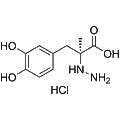
Synonyms: (S)-(-)-Carbidopa hydrochloride
Carbidopa hydrochloride is a decarboxylase inhibitor that primarily targets the conversion of levodopa to dopamine in the peripheral system. This action increases the bioavailability of levodopa to the central nervous system, enhancing its therapeutic efficacy in the treatment of Parkinson's disease. Additionally, carbidopa hydrochloride acts as an aryl hydrocarbon receptor (AhR) ligand, exhibiting anticancer properties by inhibiting the proliferation of pancreatic cancer cells and tumors. Its dual functionality highlights the potential for further clinical applications in neurology and oncology research.
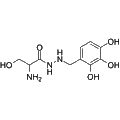
Synonyms: Ro 4-4602
Benserazide is an inhibitor of aromatic L-amino acid decarboxylase (AADC) and L-DOPA decarboxylase, primarily targeting the PKM2 enzyme. By binding directly to PKM2, Benserazide inhibits its activity, resulting in the suppression of aerobic glycolysis and the concurrent upregulation of oxidative phosphorylation (OXPHOS). This compound is valuable for research applications related to Parkinson's disease and melanoma.