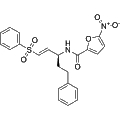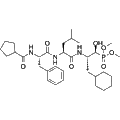
Cathepsin

Cathepsin inhibitors act on lysosomal proteases, mainly the papain-like cysteine cathepsins B, C, K, L and S. Cysteine cathepsins degrade proteins in the endolysosomal system and, after secretion, also remodel the extracellular matrix. In 1996 loss of cathepsin K was shown to cause pycnodysostosis, a lysosomal disease with dense, brittle bones. Cathepsin K is the main collagen-degrading protease of osteoclasts, which makes it a target in bone resorption studies. Odanacatib and balicatib inhibit cathepsin K, petesicatib targets cathepsin S, and CA-074 is selective for cathepsin B. CA-074 methyl ester is a membrane-permeable form for work in intact cells. Gly-Phe-beta-naphthylamide, a cathepsin C substrate, is used to rupture lysosomes in live cells.

Items 101-121 of 121

  • SQ 32602
    Cat. No.
    A39888

    SQ 32602

    SQ 32602 is a potent inhibitor of cathepsin E, exhibiting an IC50 value of 88 nM. This compound selectively inhibits cathepsin E activity, making it valuable for research into lysosomal function and proteolytic processes. SQ 32602 is suitable for studies involving cancer biology, autoimmune diseases, and other conditions where cathepsin E modulation may play a critical role.

    Out of stock

    All 3 sizes
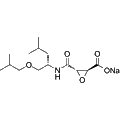
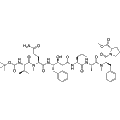
  • NC 2300
    Cat. No.
    A39889

    NC 2300

    Synonyms: VEL 0230

    NC 2300 is a selective and orally active inhibitor of cysteine cathepsins, specifically targeting cathepsin B, K, and S with IC50 values of 284, 34.5, and 186 nM, respectively. This compound is particularly useful in the study of diseases related to bone mineral disorders, enabling researchers to explore the role of cathepsins in these conditions and potential therapeutic interventions.

    25 mg
    $1,275.00
    50 mg
    $1,625.00
    All 3 sizes
  • TB-11
    Cat. No.
    A39890

    TB-11

    TB-11 is a potent Cathepsin D inhibitor, demonstrating an IC50 of 0.126 nM for Cathepsin D, alongside inhibitory activity of 1.92 nM for Cathepsin E and 48.8 nM for BACE1. This compound is valuable for research focused on tumor biology and the role of cathepsins in cancer progression. Its selectivity and potency make it a useful tool for investigating the therapeutic potential of Cathepsin D inhibition in various oncological studies.

    Out of stock

    All 3 sizes
  • Cathepsin K-IN-9
    Cat. No.
    A39892

    Cathepsin K-IN-9

    Cathepsin K-IN-9 is a potent and selective inhibitor of Cathepsin K, exhibiting an IC50 of 6.2 nM. It demonstrates remarkable selectivity with IC50 values exceeding 10,000 nM for Cathepsins B, L, and S, providing over 1600-fold selectivity. With its excellent safety profile and metabolic stability, Cathepsin K-IN-9 is suitable for research applications in osteoporosis and other bone resorption-related studies.

    Out of stock

    All 3 sizes
  • MPI8
    Cat. No.
    A39893

    MPI8

    Synonyms: TG0205221

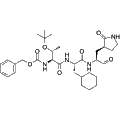
    MPI8 is an inhibitor of the major protease of SARS-CoV-2 (MPro) and cathepsin L, exhibiting significant antiviral activity. It functions through dual and selective inhibition of these key proteases, impacting the viral life cycle and host cellular processes. MPI8 is suitable for use in clinical studies targeting COVID-19 and contributes to understanding therapeutic strategies against SARS-CoV-2.

    25 mg
    $1,530.00
    50 mg
    $1,950.00
    All 3 sizes
  • BML-244
    Cat. No.
    A39895

    BML-244

    BML-244 is a potent inhibitor of cathepsin K, a cysteine proteinase involved in various pathological processes. This compound demonstrates significant biological activity in the context of inflammatory conditions, making it valuable for research applications related to rheumatoid arthritis (RA) and periodontitis. The inhibition of cathepsin K by BML-244 facilitates the exploration of its role in bone resorption and tissue remodeling, contributing to a better understanding of these diseases.

    25 mg
    $1,275.00
    50 mg
    $1,625.00
    All 3 sizes
  • Cathepsin S-IN-1
    Cat. No.
    A39897

    Cathepsin S-IN-1

    Cathepsin S-IN-1 is a potent inhibitor of Cathepsin S, a cysteine protease involved in the regulation of immune responses and antigen processing. By selectively targeting Cathepsin S, this compound can modulate inflammatory pathways and contribute to studies on autoimmune diseases, cancer, and other pathological conditions linked to protease activity. Its application in research may provide insights into therapeutic strategies aimed at inhibiting Cathepsin S-mediated processes.

    1 mg
    $390.00
    5 mg
    $925.00
    All 5 sizes
  • MDL 27399
    Cat. No.
    A39898

    MDL 27399

    MDL 27399 is a selective inhibitor of human neutrophil cathepsin G, exhibiting a Ki value of 7 μM. This compound is instrumental in studying the role of cathepsin G in inflammatory diseases, allowing researchers to explore potential therapeutic avenues for conditions characterized by excessive neutrophil activity.

    25 mg
    $1,275.00
    50 mg
    $1,625.00
    All 3 sizes
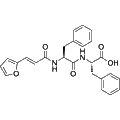
  • FA-Phe-Phe
    Cat. No.
    A42346

    FA-Phe-Phe

    FA-Phe-Phe is a furylacryloyl (fa)-amino acid derivative that serves as a specific substrate for Cathepsin A. This compound is valuable in elucidating the enzymatic activity and functional mechanisms of Cathepsin A, contributing to research on its role in physiological and pathological processes. FA-Phe-Phe is particularly useful in studies involving enzymatic assays and screening for potential inhibitors or modulators of Cathepsin A.

    Out of stock

    All 3 sizes
  • Verducatib
    Cat. No.
    A43557

    Verducatib

    Verducatib is an orally active inhibitor of cathepsin C, also known as Dipeptidyl Peptidase I (DPP1). By inhibiting the activation of neutrophil serine proteases, Verducatib restores the balance of proteases and inhibitors, thereby reducing pulmonary inflammation and enhancing responses to infection. This compound has demonstrated efficacy in decreasing the frequency and severity of acute exacerbations in bronchiectasis, while also improving lung function and quality of life. Its safety profile is comparable to placebo, with a slight increase in mild-to-moderate cutaneous adverse events at higher doses, indicating potential for clinical application.

    1 mg
    $530.00
    5 mg
    $1,355.00
    All 4 sizes
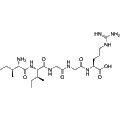
  • Cathepsin G(1-5)
    Cat. No.
    A50149

    Cathepsin G(1-5)

    Cathepsin G(1-5) is an antimicrobial peptide derived from the clostripain-digested cathepsin G mixture. This peptide exhibits significant antimicrobial activity, making it valuable for research on host defense mechanisms and the development of novel therapeutic agents. Cathepsin G(1-5) is utilized in studies exploring its effects on bacterial pathogens and potential applications in infection control.

    Out of stock

    All 3 sizes
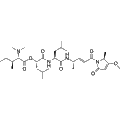
  • Gallinamide A
    Cat. No.
    A53347

    Gallinamide A

    Gallinamide A is a potent inhibitor of cathepsin L, demonstrating an IC50 value of 17.6 pM. This compound plays a crucial role in research applications focused on investigating the functions of cathepsin L in various biological processes, including protein degradation and immune response regulation. Its inhibitory activity makes Gallinamide A a valuable tool for studying the implications of cathepsin L in pathophysiological conditions.

    25 mg
    $1,905.00
    50 mg
    $2,445.00
    All 3 sizes
  • DCG04
    Cat. No.
    A75037

    DCG04

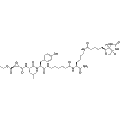
    DCG04 is an activity-based probe targeting cysteine cathepsins, serving as a multivalent ligand for the mannose-6-phosphate receptor. This compound enables the selective labeling of various cysteine cathepsins in cell and tissue lysates, facilitating the study of their roles in physiological and pathological processes. DCG04 is useful for researchers investigating enzyme activity and potential therapeutic interventions involving cysteine cathepsins.

    1 mg
    $220.00
    5 mg
    $560.00
    All 2 sizes
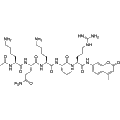
  • Ac-KQKLR-AMC TFA
    Cat. No.
    A77639

    Ac-KQKLR-AMC TFA

    Synonyms: Cathepsin S substrate TFA

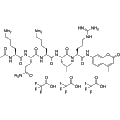
    Ac-KQKLR-AMC TFA is a substrate peptide for Cathepsin S, conjugated with the fluorescent indicator AMC (Excitation/Emission = 354 nm/442 nm). This reagent facilitates the measurement of Cathepsin S activity, enabling researchers to study proteolytic processes and assess enzyme function in various biological contexts. Its application is crucial for investigations into the role of Cathepsin S in physiological and pathological conditions.

    5 mg
    $110.00
    10 mg
    $185.00
    All 4 sizes
  • Cathepsin S, human
    Cat. No.
    A77678

    Cathepsin S, human

    Synonyms: CTSS

    Cathepsin S, human, is a potent cysteine protease that plays a crucial role in the degradation of damaged or harmful proteins within the endolysosomal pathway. This enzyme is implicated in various pathological processes, including arthritis, cancer, and cardiovascular diseases. Its activity makes it a valuable target for research applications aimed at understanding these diseases and developing therapeutic interventions.

    0.05 mg
    $295.00
    All 1 sizes
  • Cathepsin Inhibitor 3
    Cat. No.
    A77702

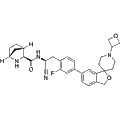
    Cathepsin Inhibitor 3

    Cathepsin Inhibitor 3 is a selective inhibitor of the serine/threonine protease cathepsin S, functioning as a valuable tool in studying protease-mediated biological processes. This compound serves as a non-radioactive precursor in the synthesis of fluorine-18 radiolabeled compounds, facilitating research in molecular imaging. Additionally, Cathepsin Inhibitor 3 features an alkyne group, enabling its use in copper-catalyzed azide-alkyne cycloaddition (CuAAc), making it a versatile reagent for click chemistry applications in chemical biology.

    Out of stock

    All 3 sizes
  • Cathepsin H, human liver
    Cat. No.
    A77709

    Cathepsin H, human liver

    Cathepsin H, human liver, is a lysosomal cysteine protease that functions as both an aminopeptidase and an endopeptidase. This enzyme is essential for the catabolism of proteins within the lysosomal system. It plays a significant role in regulating tumor cell behavior and is implicated in the pathological processes of various brain diseases, making it valuable for research in cancer biology and neurodegenerative disorders.

    Out of stock

    All 3 sizes
  • Bz-RGFFP-4MβNA
    Cat. No.
    A77728

    Bz-RGFFP-4MβNA

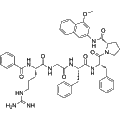
    Bz-RGFFP-4MβNA is a specific substrate for Cathepsin D, designed for use in either colorimetric or fluorometric assays. It enables the detection and quantification of Cathepsin D activity, making it a valuable tool for studying proteolytic processes and their implications in various biological conditions. This compound facilitates research in areas including cancer, neurodegenerative diseases, and other pathologies where Cathepsin D plays a critical role.

    Out of stock

    All 3 sizes
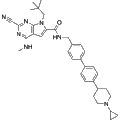
  • Ac-KQKLR-AMC
    Cat. No.
    A77730

    Ac-KQKLR-AMC

    Synonyms: Cathepsin S substrate

    Ac-KQKLR-AMC is a substrate peptide designed for the fluorescent monitoring of Cathepsin S activity. Labeled with AMC, this compound exhibits excitation and emission wavelengths of 354 nm and 442 nm, respectively. It is primarily utilized in biochemical assays to measure the enzymatic activity of Cathepsin S, providing valuable insights into its role in physiological and pathological processes.

    Out of stock

    All 3 sizes
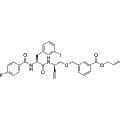
  • Cathepsin D
    Cat. No.
    A89206

    Cathepsin D

    Synonyms: CTSD

    Cathepsin D (CTSD) is a lysosomal aspartic protease that plays a critical role in regulating lysosomal protease activity. Disruption of Cathepsin D function is associated with lysosomal dysfunction and the accumulation of proteins implicated in neurodegenerative diseases. Additionally, Cathepsin D is involved in the metastatic progression of breast cancer. This reagent is valuable for research applications related to cancer biology, neurodegeneration, and lysosomal disorders.

    5 mg
    $825.00
    10 mg
    $1,350.00
    All 2 sizes
  • Cathepsin-IN-5
    Cat. No.
    B21959

    Cathepsin-IN-5

    Cathepsin-IN-5 is a selective inhibitor of cathepsins L and S, exhibiting IC50 values of 6.2 μM and 81 nM, respectively. This compound effectively inhibits cancer cell proliferation and induces apoptosis, while also reducing the growth of hepatocellular tumors in mouse models. Additionally, Cathepsin-IN-5 modulates the expression of genes associated with cell death and proliferation, making it a valuable reagent for research into hepatocellular carcinoma.

    Out of stock

    All 3 sizes
Items 101-121 of 121

Added to your cart

View Cart Checkout

    Loading...