DHFR

Dihydrofolate reductase (DHFR) inhibitors block the enzyme that reduces dihydrofolate to tetrahydrofolate. Tetrahydrofolate carries one-carbon units for the synthesis of thymidylate, purines and several amino acids, so DHFR inhibition starves dividing cells of DNA precursors. In 1958 aminopterin and amethopterin, the compound now called methotrexate, were shown to inhibit the enzyme. Methotrexate, aminopterin and pralatrexate are classical antifolates, whereas the lipophilic trimetrexate enters cells without the folate carrier. Pemetrexed, described in 1997 as LY231514, also inhibits thymidylate synthase and glycinamide ribonucleotide formyltransferase. Proguanil, whose metabolite cycloguanil acts on the parasite enzyme, and the diaminopyrimidine diaveridine represent inhibitors of microbial DHFR.

Items 51-66 of 66

  • NSC309401 dihydrochloride
    Cat. No.
    A49292

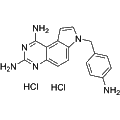
    NSC309401 dihydrochloride

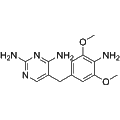
    NSC309401 dihydrochloride is a selective inhibitor of dihydrofolate reductase (DHFR) from Escherichia coli, exhibiting an IC50 of 189 nM and a KD of 14.57 nM. This compound is primarily utilized in studies focused on microbial metabolism and antibiotic resistance. Its potent inhibition of DHFR makes it a valuable tool in researching folate biosynthesis pathways and developing novel therapeutic agents.

    Out of stock

    All 3 sizes
  • N-Didesmethyladitoprim
    Cat. No.
    A50410

    N-Didesmethyladitoprim

    Synonyms: N-Didesmethyl-ADP

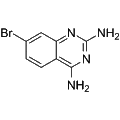
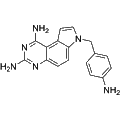
    N-Didesmethyladitoprim is a metabolite of the selective bacterial dihydrofolate reductase (DHFR) inhibitor, Aditoprime. This compound effectively inhibits the conversion of dihydrofolic acid to tetrahydrofolic acid, demonstrating an IC50 of 47 nM against E. coli and 520 nM against L. casei DHFR. N-Didesmethyladitoprim exhibits broad-spectrum antibacterial activity and possesses favorable pharmacokinetic properties, making it a valuable tool for research in antimicrobial mechanisms and DHFR inhibition studies.

    Out of stock

    All 3 sizes
  • NSC309401
    Cat. No.
    A50434

    NSC309401

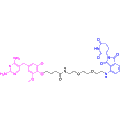
    NSC309401 is a potent inhibitor of dihydrofolate reductase (DHFR) from E. coli, exhibiting an IC50 value of 189 nM and a KD of 14.57 nM. This compound is essential for studying folate metabolism and can be utilized in research applications related to antimicrobial drug development and cancer therapeutics. Its specificity for DHFR makes it a valuable tool for elucidating the biochemical pathways influenced by folate synthesis.

    Out of stock

    All 3 sizes
  • DHFR-IN-10
    Cat. No.
    A50476

    DHFR-IN-10

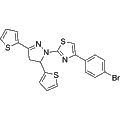
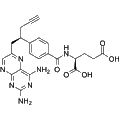
    DHFR-IN-10 is a potent inhibitor of dihydrofolate reductase (DHFR), exhibiting an IC50 of 4.21 μM against M. tuberculosis DHFR. This compound demonstrates significant antituberculosis efficacy, making it a valuable tool in research focused on combating tuberculosis and studying DHFR-related pathways. Its effectiveness positions DHFR-IN-10 as a potential lead candidate for further development in anti-tubercular drug discovery.

    Out of stock

    All 3 sizes
  • DHFR-IN-3
    Cat. No.
    A52294

    DHFR-IN-3

    DHFR-IN-3 is a dihydrofolate reductase (DHFR) inhibitor that demonstrates an IC50 of 19 μM in rat liver DHFR and 12 μM in P. carinii DHFR. This compound is primarily utilized in pharmacological research to study the role of DHFR in folate metabolism and its implications in various disease states, including cancer and parasitic infections. Its inhibitory activity makes it a valuable tool for investigating potential therapeutic strategies targeting DHFR-related pathways.

    50 mg
    $20.00
    100 mg
    $25.00
    All 2 sizes
  • Proguanil hydrochloride
    Cat. No.
    A52347

    Proguanil hydrochloride

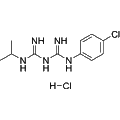
    Proguanil hydrochloride is a dihydrofolate reductase (DHFR) inhibitor primarily utilized in antimalarial research. It is metabolized into the active compound Cycloguanil, which demonstrates significant efficacy against Plasmodium species. This reagent is essential for studies focused on antimalarial drug development and exploration of DHFR pathways in cellular metabolism.

    5 mg
    $30.00
    10 mg
    $35.00
    All 5 sizes
  • Tetroxoprim
    Cat. No.
    A54033

    Tetroxoprim

    Synonyms: HE 781

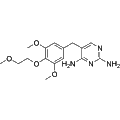
    Tetroxoprim is a potent dihydrofolate reductase (DHFR) inhibitor with significant antimicrobial properties. It serves as a critical tool in the study of antimicrobial resistance and the development of new therapeutic agents. Its ability to inhibit folate synthesis makes it valuable for research in infectious disease and related biochemical pathways.

    5 mg
    $150.00
    10 mg
    $250.00
    All 5 sizes
  • Fanotaprim
    Cat. No.
    A54035

    Fanotaprim

    Synonyms: VYR-006

    Fanotaprim is a selective inhibitor of dihydrofolate reductase (DHFR), demonstrating IC50 values of 1.57 nM for Toxoplasma gondii DHFR and 308 nM for human DHFR. This compound is particularly relevant for investigating toxoplasmosis, providing insight into potential therapeutic strategies against this parasitic infection. Its targeted inhibition of tgDHFR makes Fanotaprim a valuable tool for research in pharmacology and microbiology.

    1 mg
    $40.00
    2 mg
    $55.00
    All 8 sizes
  • (±)-Methotrexate
    Cat. No.
    A54040

    (±)-Methotrexate

    Synonyms: (±)-Amethopterin; (±)-CL14377; (±)-WR19039

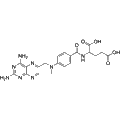
    (±)-Methotrexate is a racemic mixture of the antimetabolite and antifolate agent Methotrexate, which primarily targets the enzyme dihydrofolate reductase. By inhibiting this enzyme, (±)-Methotrexate disrupts the conversion of folic acid to tetrahydrofolate, subsequently impeding DNA synthesis. This compound is widely utilized in cancer research and applications involving cellular proliferation, as well as in studies related to autoimmune diseases and other conditions requiring modulation of folate metabolism.

    50 mg
    $25.00
    100 mg
    $45.00
    All 2 sizes
  • Aminopterin sodium
    Cat. No.
    A54043

    Aminopterin sodium

    Synonyms: 4-Aminofolic acid sodium; APGA sodium

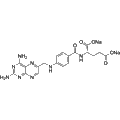
    Aminopterin sodium is a folic acid antagonist that primarily targets dihydrofolate reductase (DHFR). By inhibiting DHFR, it disrupts folate metabolism, leading to decreased nucleic acid synthesis. This compound is primarily utilized in the treatment of acute lymphoblastic leukemia and various cancers. Additionally, Aminopterin sodium is employed as an immunosuppressant for the management of autoimmune disorders.

    25 mg
    $1,275.00
    50 mg
    $1,625.00
    All 3 sizes
  • Lysine-methotrexate
    Cat. No.
    A54044

    Lysine-methotrexate

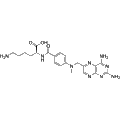
    Lysine-methotrexate is a dihydrofolate reductase (DHFR) inhibitor, structurally related to Methotrexate. This compound exhibits potent biological activity by inhibiting folate metabolism, making it useful in studying cellular processes that rely on nucleotide synthesis. Lysine-methotrexate is applicable in cancer research and other therapeutic contexts where modulation of DHFR activity is of interest.

    25 mg
    $1,275.00
    50 mg
    $1,625.00
    All 3 sizes
  • DHFR-IN-2
    Cat. No.
    A54047

    DHFR-IN-2

    DHFR-IN-2 is a potent uncompetitive inhibitor of MtDHFR (dihydrofolate reductase from Mycobacterium tuberculosis), demonstrating an IC50 value of 7 μM. This compound serves as a valuable tool for tuberculosis research, aiding in the study of pathogenic processes and potential therapeutic strategies against TB.

    25 mg
    $1,275.00
    50 mg
    $1,625.00
    All 3 sizes
  • Denopterin
    Cat. No.
    A54051

    Denopterin

    Synonyms: Pteroylglutamic acid

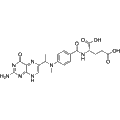
    Denopterin is a dihydrofolate reductase (DHFR) inhibitor and an established antifolate agent. This compound functions as an antimetabolite, exhibiting cytotoxic effects on rapidly dividing cells, making it relevant for cancer research. Its ability to inhibit DHFR provides a valuable tool for investigating folate metabolism and developing therapeutic strategies against various malignancies.

    25 mg
    $1,275.00
    All 1 sizes
  • TNP-351
    Cat. No.
    A54052

    TNP-351

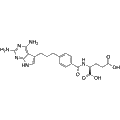
    TNP-351 is a dihydrofolate reductase (DHFR) inhibitor known for its potent antitumor activity. This antifolate compound exhibits efficacy against both leukemia and solid tumor cells in vitro and in vivo, making it a valuable tool in cancer research. Its mechanism of action involves the disruption of folate metabolism, ultimately hindering DNA synthesis and cell proliferation.

    25 mg
    $1,530.00
    50 mg
    $1,950.00
    All 3 sizes
  • PROTAC eDHFR Degrader-1
    Cat. No.
    A84545

    PROTAC eDHFR Degrader-1

    PROTAC eDHFR Degrader-1 is a proteolysis-targeting chimera (PROTAC) that specifically targets eDHFR for ubiquitin-mediated degradation. This compound effectively degrades eDHFR-YFP and various protein of interest (POI), including yellow fluorescent protein (YFP) and luciferase. Its application in research can facilitate the study of protein function and dynamics through targeted protein degradation, providing insights into cellular processes and potential therapeutic pathways.

    5 mg
    $500.00
    10 mg
    $825.00
    All 4 sizes
  • (R)-Pralatrexate
    Cat. No.
    B19929

    (R)-Pralatrexate

    (R)-Pralatrexate is the (R)-enantiomer of Pralatrexate, functioning primarily as a potent inhibitor of dihydrofolate reductase (DHFR). As an antifolate compound, it demonstrates significant biological activity by disrupting folate metabolism, which is essential for DNA synthesis. This makes (R)-Pralatrexate valuable in cancer research and potential therapeutic applications targeting malignant cells with high proliferation rates. Researchers may utilize this compound in studies aimed at understanding the mechanisms of antifolate resistance and the development of targeted cancer therapies.

    25 mg
    $1,405.00
    50 mg
    $1,790.00
    All 3 sizes

Items 51-66 of 66

Added to your cart

View Cart Checkout

    Loading...