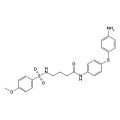
- Cat. No.
- A19920
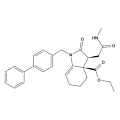
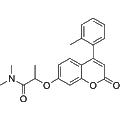
BI-6C9
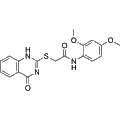
BI-6C9 is a BH3 interacting domain (Bid) inhibitor, which prevents mitochondrial outer membrane potential (MOMP) and mitochondrial fission, and protects the cells from cell death.
Search by product name, CAS, target or catalog number. Press Down Arrow to reach product suggestions, Tab to move between links, and Escape to close suggestions.
Mitochondrial metabolism compounds act on the respiratory chain, energy coupling and redox balance of mitochondria. In 1961 Mitchell proposed that phosphorylation is coupled to electron transfer through a chemiosmotic mechanism. In this model a proton gradient across the inner membrane drives adenosine triphosphate (ATP) synthase in oxidative phosphorylation (OXPHOS). Rotenone inhibits complex I of the electron transport chain, and oligomycin A blocks ATP synthase. Gboxin, reported in 2019, is an OXPHOS inhibitor that suppresses the growth of glioblastoma cells. Mito-TEMPO is a mitochondria-targeted antioxidant that scavenges superoxide in the matrix. Meldonium inhibits carnitine biosynthesis and so limits fatty acid transport into mitochondria. The set is mixed and also lists compounds with secondary mitochondrial links, such as the fluoroquinolone ciprofloxacin.
BI-6C9 is a BH3 interacting domain (Bid) inhibitor, which prevents mitochondrial outer membrane potential (MOMP) and mitochondrial fission, and protects the cells from cell death.
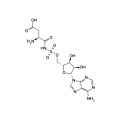
Asp-AMS, an analogue of aspartyl-adenylate, is an aspartyl-tRNA synthetase inhibitor and also a strong competitive inhibitor of the mitochondrial enzyme.
Fumarate hydratase-IN-1 (compound 2) is a cell-permeable fumarate hydratase inhibitor. Fumarate hydratase-IN-1 has antiproliferative activity against several cancer cell lines with a mean IC50 of 2.2 μM.
ER-000444793 is a potent inhibitor of mitochondrial permeability transition pore (mPTP) opening. ER-000444793 inhibits mPTP with an IC50 of 2.8 μM.
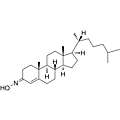
Synonyms: TRO 19622; NSC 21311
Olesoxime (TRO 19622) is a mitochondrial-targeted neuroprotective compound with mean EC50 value for increasing cell survival is 3.2 ± 0.2 µM.
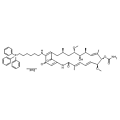
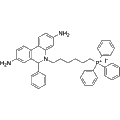
Gamitrinib TPP hexafluorophosphate is a Gamitrinib (GA) mitochondrial matrix inhibitor.
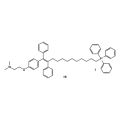
MitoTam iodide, hydriodide is a tamoxifen derivative, an electron transport chain (ETC) inhibitor, spreduces mitochondrial membrane potential in senescent cells and affects mitochondrial morphology.
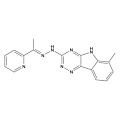
VLX600 is an iron-chelating inhibitor of oxidative phosphorylation (OXPHOS).
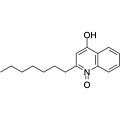
HQNO, secreted by P. aeruginosa, is a potent electron transport chain inhibitor with a Kd of 64 nM for complex III.
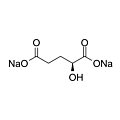
Synonyms: (S)-2-Hydroxyglutaric acid disodium
L-2-Hydroxyglutaric acid disodium ((S)-2-Hydroxyglutaric acid disodium, L-2-Hydroxyglutarate disodium, LGA, L-2HG) is an epigenetic modifier and a putative oncometabolite in kidney cancer that inhibits histone demethylases and hence promotes histone methylation.
IMT1 is a first-in-class, specific, and noncompetitive inhibitor of human mitochondrial RNA polymerase (POLRMT). It induces a conformational change in POLRMT, preventing substrate binding and inhibiting transcription in a dose-dependent manner in vitro. IMT1 decreases deoxynucleoside triphosphate levels and citric acid cycle intermediates, leading to significant depletion of cellular amino acid levels. IMT1 holds potential for the treatment of diseases associated with mitochondrial transcription disorders.
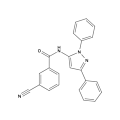
CDPPB is a selective, orally active allosteric modulator of the metabotropic glutamate receptor 5 (mGluR5). It enhances AKT and ERK1/2 signaling and upregulates BDNF mRNA expression. CDPPB also inhibits caspase-3 activation and mitigates mitochondrial dysfunction, demonstrating therapeutic potential in improving cognitive impairment, depression, and Huntington’s disease.
MitoSOX Red is a live cell fluorescent probe that specifically targets mitochondria and is cell membrane permeable. MitoSOX Red enters mitochondria and is oxidized by superoxide but not by other ROS or RNS generating systems. The oxidized MitoSOX Red then binds to nucleic acids in mitochondria/nucleus, producing strong red fluorescence. MitoSOX Red can be used as a fluorescent indicator to specifically detect superoxide. In addition, superoxide dismutase (SOD) can prevent the oxidation of MitoSOX Red. Excitation/emission wavelength: 510/580 nm.
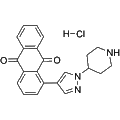
PDK4-IN-1 hydrochloride is a potent inhibitor of pyruvate dehydrogenase kinase 4 (PDK4) with an IC50 value of 84 nM. This anthraquinone derivative effectively suppresses cellular transformation and proliferation while inducing apoptosis. PDK4-IN-1 hydrochloride is valuable for research applications in diabetes, cancer, and allergy studies, showcasing significant antidiabetic, anticancer, and anti-allergic activities.
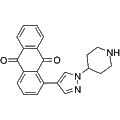
PDK4-IN-1 is a potent inhibitor of pyruvate dehydrogenase kinase 4 (PDK4), demonstrating an IC50 value of 84 nM. This anthraquinone derivative effectively represses cellular transformation and proliferation while inducing apoptosis. PDK4-IN-1 holds promising applications in the fields of cancer research, diabetes treatment, and allergy modulation.
Drpitor1a is a selective inhibitor of Dynamin-related protein 1 (Drp1). This compound effectively reduces mitochondrial reactive oxygen species (ROS) production and prevents mitochondrial fission, contributing to improved right ventricular diastolic dysfunction during ischemia-reperfusion injury. Drpitor1a holds potential for research applications in lung cancer, facilitating studies on mitochondrial dynamics and their role in cancer pathophysiology.
ClpP activator-2, or Compound GU18, acts as a specific activator of human ClpP (HsClpP), exhibiting a binding affinity with a Kd of 5.01 μM. This compound enhances the proteolytic function of HsClpP, effectively promoting the degradation of α-casein with an EC50 of 1.09 μM. Additionally, ClpP activator-2 induces mitochondrial reactive oxygen species (ROS) accumulation, resulting in mitochondrial damage and dysfunction. It demonstrates notable anti-multiple myeloma properties in vivo, making it a valuable tool for cancer research and studies targeting mitochondrial dynamics.
Out of stock
All 3 sizes
Z16078526 is a potent Ucp1 inducer that enhances endogenous Ucp1 expression and promotes p38 MAPK phosphorylation and lipolysis in primary mouse brown adipocytes. It effectively activates thermogenic gene expression and increases mitochondrial activity through uncoupled respiration. Additionally, Z16078526 augments thermogenesis in mice, making it a valuable reagent for research focused on metabolism and thermogenic regulation.
HsClpP activator-1 is a potent activator of HsClpP, exhibiting an EC50 of 0.22 μM. This compound demonstrates significant biological activity by effectively inhibiting cancer cell growth, with IC50 values ranging from 0.1 to 1 μM. HsClpP activator-1 serves as a valuable tool in cancer research and therapeutic development by modulating protein degradation pathways.
Out of stock
All 3 sizes
DRP1 Allosteric-IN-3 is an allosteric inhibitor targeting DRP1, with an IC50 value of 11 μM for the DRP1:MiD49 protein-protein interaction. This compound provides valuable insights into mitochondrial division processes and related disorders. Its application in research can facilitate the understanding of diseases associated with mitochondrial dysfunction.
Out of stock
All 3 sizes
DRP1i27 is a selective inhibitor of human dynamin-related protein 1 (Drp1). By binding to the GTPase site and forming critical hydrogen bonds with Gln34 and Asp218, DRP1i27 effectively modulates Drp1-mediated mitochondrial fission. This compound has demonstrated protective effects against simulated ischemia-reperfusion injury in cell line models, making it valuable for research into mitochondrial dynamics and neuroprotection.
Drp1-IN-1 is a selective inhibitor of dynamin-related protein 1 (Drp1), exhibiting an IC50 of 0.91 μM. This compound interferes with Drp1's regulatory role in mitochondrial dynamics, promoting mitochondrial fusion and potentially mitigating cellular stress responses. Drp1-IN-1 is useful in research focused on mitochondrial function, neurodegenerative diseases, and other conditions where oxidative stress plays a critical role.
MB-0223 is a selective partial inhibitor targeting the dynamin-related GTPase Drp1, with an IC50 of 1.3 μM, demonstrating high potency and specificity over other dynamin family members, such as Opa1 and dynamin-1 (IC50 > 100 μM). This compound is useful in studies investigating mitochondrial dynamics, apoptosis, and cellular energy metabolism, making it an important tool for research on neurodegenerative diseases and cancer biology.
DRP1 Allosteric-IN-2 is a potent allosteric inhibitor of Dynamin-related protein 1 (DRP1). It demonstrates an IC50 value of 4.3 μM for inhibiting the DRP1:MiD49 protein-protein interaction. This compound is valuable for investigating diseases associated with mitochondrial division disorders, providing insights into cellular dynamics and potential therapeutic strategies.
Out of stock
All 3 sizes
DRP1 Allosteric-IN-1 is an allosteric inhibitor of dynamin-related protein 1 (DRP1), demonstrating an IC50 of 3.6 μM for disrupting the DRP1:MiD49 protein-protein interaction. This compound serves as a valuable tool for investigating mitochondrial division disorders and associated pathologies. Its application in biochemical research can enhance the understanding of the role of mitochondrial dynamics in diverse diseases.
Out of stock
All 3 sizes