- Cat. No.
- A12652
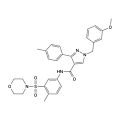
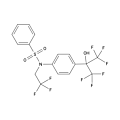
T0901317
T0901317 is a potent and selective agonist for LXR and FXR, with EC50s of 50 nM and 5 μM, respectively
Search by product name, CAS, target or catalog number. Press Down Arrow to reach product suggestions, Tab to move between links, and Escape to close suggestions.
Farnesoid X receptor (FXR) agonists and antagonists act on a nuclear receptor that senses bile acids. In 1999 three groups identified bile acids such as chenodeoxycholic acid as endogenous FXR ligands. FXR is expressed mainly in liver, intestine and kidney, where it controls bile acid synthesis, transport and enterohepatic circulation. Activated FXR induces small heterodimer partner, which represses cholesterol 7α-hydroxylase, the rate-limiting enzyme of bile acid synthesis. FXR ligands are used to study bile acid, lipid and glucose metabolism and liver fibrosis models. Steroidal agonists include obeticholic acid, a semisynthetic bile acid analog. GW4064, cilofexor and tropifexor are nonsteroidal agonists, while DY 268 serves as an FXR antagonist.
T0901317 is a potent and selective agonist for LXR and FXR, with EC50s of 50 nM and 5 μM, respectively
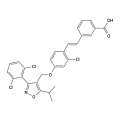
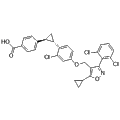
GW4064 is a selective, non-steroidal farnesoid X receptor (FXR) agonist (EC50 = 15 nM).
Synonyms: WAY362450; XL335
WAY-362450 is a highly potent, selective, and orally bioavailable farnesoid X receptor (FXR) agonist (EC50: 4 nM, eff=149%).
Synonyms: INT-747; 6-ECDCA
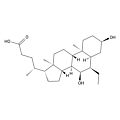
Obeticholic Acid is a potent and selective farnesoid X receptor (FXR) agonist with EC50 of 99 nM
Synonyms: GS-9674
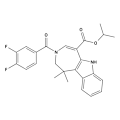
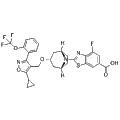
Cilofexor (GS-9674) is a farnesoid X receptor (FXR) agonist.
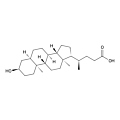
Lithocholic acid is a bile acid that acts as a detergent to solubilize fats for absorption.
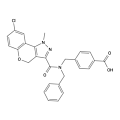
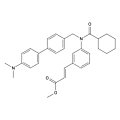
DY 268 is a trisubstituted-pyrazol carboamide based compound that acts as a potent FXR antagonist (IC50 = 7.5 nM).
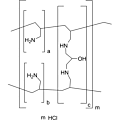
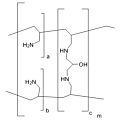
Sevelamer hydrochloride is a phosphate binding drug used to treat hyperphosphatemia in patients with chronic kidney disease; consists of polyallylamine that is crosslinked with epichlorohydrin.
Synonyms: LJN452
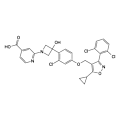
Tropifexor, also known as LJN452, is a farnesoid X receptor agonist for the Treatment of Cholestatic Liver Diseases and Nonalcoholic Steatohepatitis (NASH).
Synonyms: PX-20606; PX-102; PX10
PX20606, also known as PX-102, is a FXR agonist. It induces high-density lipoprotein-mediated transhepatic cholesterol efflux in mice and monkeys and prevent atherosclerosis in cholesteryl ester transfer protein transgenic low-density lipoprotein receptor (-/-) mice.
Synonyms: Px-102
Px-104, also known as Px-102, is a farnesoid X receptor (FXR) agonist potentially for the treatment of non-alcoholic fatty liver disease.
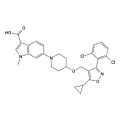
LY2562175 is a potent and selective FXR agonist in vitro and has robust lipid modulating properties, lowering LDL and triglycerides while raising HDL in preclinical species.
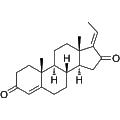
Synonyms: Z/E-Guggulsterone
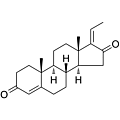
Guggulsterone is a plant sterol derived from the gum resin of the tree Commiphora wightii. Guggulsterone inhibits the growth of a wide variety of tumor cells and induces apoptosis through down regulation of antiapoptotic gene products (IAP1, xIAP, Bfl-1/A1, Bcl-2, cFLIP and survivin), modulation of cell cycle proteins (cyclin D1 and c-Myc), activation of caspases and JNK, inhibition of Akt.
Synonyms: Z-Guggulsterone
(Z)-Guggulsterone is a phytosteroid found in the resin of the guggul plant, Commiphora mukul. It acts as an antagonist of the farnesoid X receptor in humans.
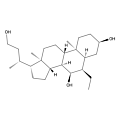
BAR502 is a dual FXR and GPBAR1 agonist with IC50 values of 2 μM and 0.4 μM, respectively.
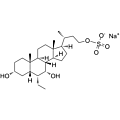
INT-767 is a dual farnesoid X receptor (FXR)/TGR5 agonist with mean EC50s of 30 and 630 nM, respectively.
Fexaramine is a small molecule farnesoid X receptor (FXR) agonist with 100-fold increased affinity relative to natural compounds.
Sevelamer is a phosphate binding drug used to treat hyperphosphatemia in patients with chronic kidney disease; consists of polyallylamine that is crosslinked with epichlorohydrin.
Synonyms: TβMCA
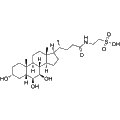
Tauro-β-muricholic acid (TβMCA) serves as a competitive and reversible antagonist of the farnesoid X receptor (FXR), exhibiting an IC50 of 40 μM. This trihydroxylated bile acid demonstrates significant ability to inhibit bile acid-induced hepatocyte apoptosis by preserving mitochondrial membrane potential and hindering FXR signaling. It influences bile acid synthesis, hepatic lipid metabolism, and insulin sensitivity, while its accumulation can disrupt metabolic homeostasis, facilitating cancer stem cell proliferation and tumor progression. TβMCA is valuable in studies related to bile acid metabolism disorders, non-alcoholic fatty liver disease, colorectal cancer, and liver fibrosis, owing to its dual functionality in stabilizing mitochondrial integrity and regulating hepatic metabolism.
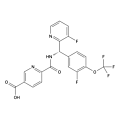
EDP-305 is a highly selective agonist of the farnesoid X receptor (FXR), exhibiting potent activity with EC50 values of 34 nM in chimeric FXR and 8 nM in full-length FXR. This compound demonstrates significant antifibrotic effects, making it a valuable tool for studying liver diseases. EDP-305 is relevant in research focused on primary biliary cholangitis (PBC) and non-alcoholic steatohepatitis (NASH).
Synonyms: (E)-Guggulsterone
(-)-(E)-Guggulsterone is a natural stereoisomer of Guggulsterone that functions as a Farnesoid X Receptor (FXR) antagonist with an IC50 of 24.06 μM. This compound exhibits significant hypolipidemic effects and demonstrates the ability to suppress dengue virus (DENV) replication by enhancing antiviral interferon responses through the activation of Nrf2 and upregulation of HO-1 expression. Additionally, (-)-(E)-Guggulsterone displays antibacterial properties against various strains, including Bacillus subtilis, Staphylococcus aureus, and Pseudomonas aeruginosa, as well as offering cardiac protective and antioxidant benefits in rat models.
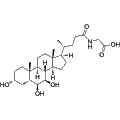
Gly-β-MCA is a potent farnesoid X receptor (FXR) inhibitor, selectively acting within the intestine. This stable bile acid demonstrates significant biological activity, making it a promising candidate for research focused on metabolic disorders. Its oral bioavailability enhances its potential for therapeutic application and further investigation in related studies.
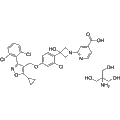
Synonyms: GS-9674 tromethamine
Cilofexor tromethamine is a nonsteroidal agonist of the farnesoid X receptor (FXR), primarily targeting liver diseases. It demonstrates significant potential in improving markers of cholestasis and liver injury, making it a valuable reagent in research for conditions such as primary sclerosing cholangitis. Cilofexor tromethamine has exhibited a favorable safety profile in clinical studies involving patients without cirrhosis, leading to notable enhancements in liver biochemical parameters and cholestatic markers.