
- Cat. No.
- A18704
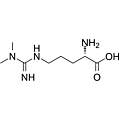
Asymmetric dimethylarginine
Asymmetric dimethylarginine is an endogenous inhibitor of nitric oxide synthase (NOS), and functions as a marker of endothelial dysfunction in a number of pathological states.
Search by product name, CAS, target or catalog number. Press Down Arrow to reach product suggestions, Tab to move between links, and Escape to close suggestions.
Nitric oxide synthase (NOS) inhibitors and related tools act on the enzymes that make nitric oxide from L-arginine. NOS was first isolated from rat brain in 1990 and shown to require calmodulin for its activity. Three isoforms exist, neuronal, endothelial and inducible NOS (iNOS), the last expressed mainly in activated immune cells. 1400W dihydrochloride, described in 1997 as a slow, tight-binding iNOS inhibitor, and GW274150 are used for isoform-selective studies. L-NIO dihydrochloride is an arginine analog that inhibits several isoforms. Asymmetric dimethylarginine is an endogenous NOS inhibitor that accumulates in chronic renal failure. 2,4-Diamino-6-hydroxypyrimidine blocks GTP cyclohydrolase I, which limits synthesis of the NOS cofactor tetrahydrobiopterin.
Asymmetric dimethylarginine is an endogenous inhibitor of nitric oxide synthase (NOS), and functions as a marker of endothelial dysfunction in a number of pathological states.
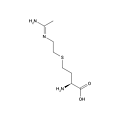
GW274150 is a potent and highly selective inhibitor of iNOS, reduces experimental renal ischemia/reperfusion injury.
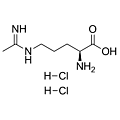
L-NIO dihydrochloride is a potent, non-selective and NADPH-dependent nitric oxide synthase (NOS) inhibitor.
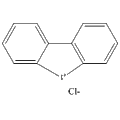
Synonyms: Dibenziodolium chloride; DPI Chloride
Diphenyleneiodonium chloride has been shown to be a potent irreversible inhibitor of NOS2 (iNOS) from macrophages and NOS3 (eNOS) from endothelial cells.
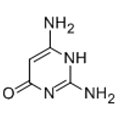
2,4-Diamino-6-hydroxypyrimidine is a specific GTP cyclohydrolase I inhibitor (the rate-limiting enzyme in de novo pterin synthesis), blocks BH4 synthesis and suppresses NO production.
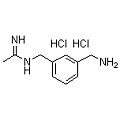
Synonyms: 1400 W
1400W Dihydrochloride is a slow, tight binding, potent and highly selective inhibitor of inducible nitric oxide synthase (Kd = 7 nM). Selective over nNOS and eNOS (Ki values are 2 and 50 μM respectively). Cell-permeable and active in vivo.
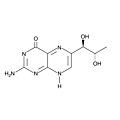
Synonyms: L-erythro-Biopterin; L-Biopterin; NSC 339699
Biopterin is the oxidized form of tetrahydro-L-biopterin (BH4), a nitric oxide synthase (NOS) cofactor. L-Biopterin can be reduced to BH4 via thioredoxin reductase followed by dihydropteridine reductase or reduced glutathione. It is extremely toxic to human melanocytes in culture (IC50 = 0.2 uM after 48 hrs).
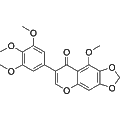
Irisflorentin is a naturally occurring isoflavone that functions as an inhibitor of inducible nitric oxide synthase (iNOS). It significantly decreases both the transcriptional and translational levels of iNOS, leading to reduced nitric oxide (NO) production. Due to its anti-inflammatory properties, Irisflorentin is of interest for research applications aimed at understanding and mitigating inflammatory processes.
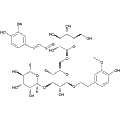
Cistanoside A is a phenylethanoid compound that functions as a nitric oxide (NO) synthase inhibitor. It effectively reduces nitric oxide accumulation in biological systems while demonstrating no impact on inducible nitric oxide synthase (iNOS) mRNA, protein levels, or activity. This compound exhibits significant anti-inflammatory properties, making it a valuable tool for research aimed at understanding inflammatory pathways and developing therapeutic strategies.
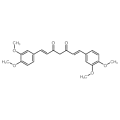
Dimethoxycurcumin, a synthetic curcumin analogue with higher metabolic stability, inhibits NO production, inducible NO synthase expression and NF-kappaB activation in RAW264.7 macrophages activated with LPS.
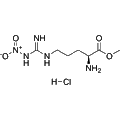
Synonyms: NG-Nitroarginine methyl ester hydrochloride
L-NAME hydrochloride inhibits NOS with an IC50 of 70 μM. L-NAME is a precursor to NOS inhibitor L-NOARG which has an IC50 value of 1.4 μM.
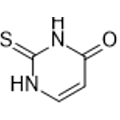
Synonyms: Thiouracil
2-Thiouracil is a selective inhibitor of neuronal nitric oxide synthase (nNOS), exhibiting a Ki value of 20 μM. It effectively antagonizes BH4-induced nNOS dimerization, thereby modulating nitric oxide synthesis in neuronal tissues. In addition to its role as an nNOS inhibitor, 2-Thiouracil also has antithyroid properties and serves as a specific marker for melanoma detection. Furthermore, it promotes root growth in pea and corn, making it a valuable tool for various agricultural and biochemical research applications.
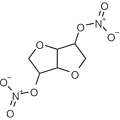
Synonyms: Disorlon; NSC 80038; SST-101; Dilatrate SR; Korodil
Isosorbide dinitrate is an organic nitrate ester and nitric oxide (NO) donor in the same class as nitroglycerin. Isosorbide dinitrate increases oxygenation of tumor tissue in vivo in a mouse xenograft model. It also inhibits platelet aggregation in vitro and in vivo at concentrations in the micromolar range. Formulations containing isosorbide dinitrate have been used for the treatment of angina pectoris.
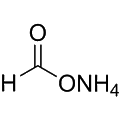
Synonyms: Ammonium formate
Formic acid ammonium serves as an ammonium salt derivative of formic acid, functioning as a nitric oxide/cyclic guanosine monophosphate (NO/cGMP) activator. This compound activates NO/cGMP signaling in endothelial cells and inhibits calcium ion influx in vascular smooth muscle cells, promoting vasomotor relaxation. Additionally, formic acid ammonium inhibits cytochrome C oxidase, disrupting the electron transport chain and resulting in ATP depletion. This reagent also finds utility as a feed additive, where it can lower the feed pH, inhibit the growth of pathogenic microorganisms such as Escherichia coli and Salmonella, thereby enhancing the shelf life of the feed.
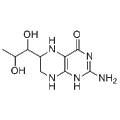
Tetrahydrobiopterin is a cofactor of the aromatic amino acid hydroxylases enzymes and also acts as an essential cofactor for all nitric oxide synthase (NOS) isoforms.
Out of stock
All 6 sizes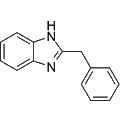
Bendazol is a nitric oxide synthase activator that plays a significant role in vascular smooth muscle relaxation. Its primary biological activity involves the dilation of blood vessels, leading to reduced peripheral resistance and improved blood circulation, making it useful in the study of antihypertensive effects. Bendazol has been shown to inhibit myopia development in rabbit models and positively influences kidney function by enhancing NO synthase activity in nephrogenic hypertension models. Additionally, this compound affects sexual behavior and spermatogenesis in male rats, contributing to its relevance in reproductive health research.
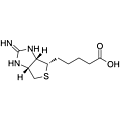
Synonyms: Guanidinobiotin
2-Iminobiotin (Guanidinobiotin) is a biotin (vitamin H or B7) analog. 2-Iminobiotin is a reversible nitric oxide synthases inhibitor with Kis of 21.8 and 37.5μM for murine iNOS and rat n-cNOS, respectively.
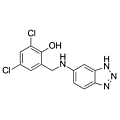
IC87201, an inhibitor of PSD95-nNOS protein-protein interactions, suppresses NMDAR-dependent NO and cGMP formation.
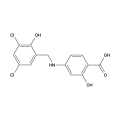
ZL006 is a potent inhibitor of nNOS/PSD-95 interaction, and inhibits NMDA receptor-mediated NO synthesis.
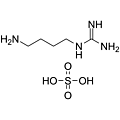
Agmatine sulfate exerts modulatory action at multiple molecular targets, such as neurotransmitter systems, ion channels and nitric oxide synthesis. It is an endogenous agonist at imidazoline receptor and a NO synthase inhibitor.
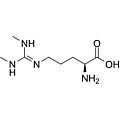
Synonyms: Symmetric dimethylarginine; NG,NG'-Dimethyl-L-arginine
SDMA (Symmetric dimethylarginine) is an endogenous inhibitor of nitric oxide (NO) synthase activity.
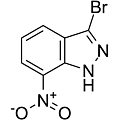
3-Bromo-7-nitroindazole is a more potent and selective inhibitor of neuronal nitric oxide synthase (nNOS) than eNOS or inducible nitric oxide synthase (iNOS).
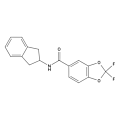
AVE-3085 is a potent endothelial nitric oxide synthase enhancer, used for cardiovascular disease treatment.
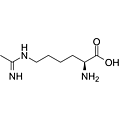
L-NIL is a potent and selective inhibitor of inducible NO synthase with IC50s of 3.3 and 92 μM for mouse inducible NO synthase and rat brain constitutive NO synthase, respectively.
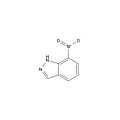
7-Nitroindazole, a heterocyclic compound, acts as a selective inhibitor for neuronal nitric oxide synthase showing a 10-fold selectivity for neuronal NOS.