
- Cat. No.
- A10884
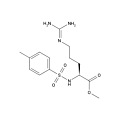
TAME
TAME is a small molecule anaphase-promoting complex/cyclosome (APC) inhibitor with an IC50 of 12 μM.
In stock
View Details
Search by product name, CAS, target or catalog number. Press Down Arrow to reach product suggestions, Tab to move between links, and Escape to close suggestions.
E3 ligase inhibitors and ligands act on the enzymes that transfer ubiquitin to substrate proteins. In the ubiquitin system an E1 activating enzyme, an E2 conjugating enzyme and an E3 ligase together mark proteins for proteasomal degradation. The E3 ligase sets substrate specificity, which makes these enzymes a common entry point for induced protein degradation. Thalidomide binds cereblon, a substrate receptor of a cullin 4 ubiquitin ligase, and avadomide belongs to the same chemical class. SKPin C1 acts on S-phase kinase-associated protein 2 (Skp2), while HLI 373 and TAME address the human double minute 2 (HDM2) ligase and the anaphase-promoting complex.
TAME is a small molecule anaphase-promoting complex/cyclosome (APC) inhibitor with an IC50 of 12 μM.
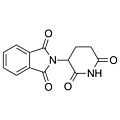
Thalidomide can directly inhibit angiogenesis induced by bFGF or VEGF in vivo.
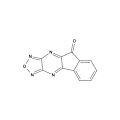
SMER3 is a selective inhibitor of a yeast SCF family E3 ubiquitin ligase (SCFMet30) in vitro and in vivo. Induces the expression of MET genes; blocks cell proliferation.
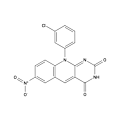
Synonyms: HL98C
HLI-98C, an analog, indeed inhibited Mdm2 E3 ligase activity.
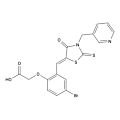
SKPin C1 inhibits Skp2-mediated p27 degradation and it induces cell cycle arrest.
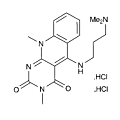
HLI 373 is an inhibitor of Hdm2 ubiquitin ligase (E3) which blocks Hdm2-mediated ubiquitylation, proteasomal degradation of p53 and activates p53-dependent transcription.
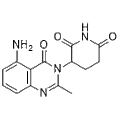
Synonyms: CC122
Avadomide(CC-122), a new chemical entity termed pleiotropic pathway modifier, is a novel agent for Diffuse large B-cell lymphoma(DLBCL) with antitumor and immunomodulatory activity. Its molecular target is the protein cereblon (CRBN), a substrate receptor of the cullin ring E3 ubiquitin ligase complex CRL4CRBN.
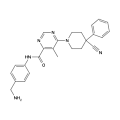
BI-8622 is a specific inhibitor of the HUWE1 ubiquitin ligase.
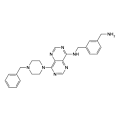
BI-8626 is a specific inhibitor of the HUWE1 ubiquitin ligase with an IC50 of 0.9 μM.
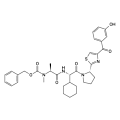
Synonyms: E3 ligase Ligand 11
cIAP1 ligand 2 is the LCL161 derivative based IAP ligand. cIAP1 ligand 2 can be connected to the ABL ligand for protein by a linker to form SNIPER.
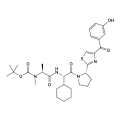
Synonyms: E3 ligase Ligand 12
cIAP1 ligand 1 is the LCL161 derivative based IAP ligand. cIAP1 ligand 1 can be connected to the ABL ligand for protein by a linker to form SNIPER.
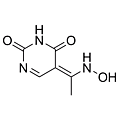
NSC232003 is a highly potent and cell-permeable UHRF1 inhibitor, which inhibits DNA methylation in vitro and disrupts DNMT1/UHRF1 interactions at a cellular level.
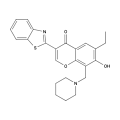
SZL P1-41 is a specific Skp2 inhibitor, binds to the F-box domain of Skp2 to prevent Skp1 association and Skp2 SCF complex formation.
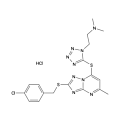
WS-383 is a potent, selective and reversible inhibitor of DCN1-UBC12 interaction, with an IC50 of 11 nM. WS-383 inhibits Cul3/1 neddylation, induces accumulation of p21, p27 and NRF2.
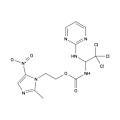
Apcin, a ligand of Cdc20, is a potent and competitive anaphase-promoting complex/cyclosome (APC/C(Cdc20)) E3 ligase activity inhibitor.
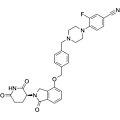
Synonyms: CC92480
CC-92480 is a cereblon E3 ubiquitin ligase modulating drug (CELMoD). CC-92480 shows high affinity to cereblon, resulting in potent antimyeloma activity.
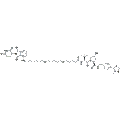
CRBN-6-5-5-VHL is a potent and selective VHL-based PROTAC degrader targeting cereblon (CRBN), with a DC₅₀ of 1.5 nM. It selectively degrades CRBN without affecting neo-substrates IKZF1 and IKZF3.
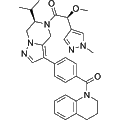
BIO-2007817 is a positive allosteric modulator (PAM) of Parkin, an E3 ubiquitin ligase. It enhances the activity of wild-type Parkin by stimulating its autoubiquitination and promotes the monoubiquitination of Miro1, with an EC50 of 0.17 μM. BIO-2007817 is a valuable tool for studying Parkin-mediated mitophagy and neurodegenerative diseases such as Parkinson's disease.
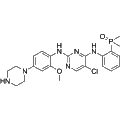
Brigatinib A is a ligand for GID4, serving a key role in targeted protein degradation strategies. This compound is utilized for the synthesis of PROTAC BCR-ABL Degrader-2, facilitating research on the modulation of protein levels in cancer cells. Its application in the development of innovative therapeutic approaches makes it an invaluable tool for cellular and molecular biology studies.
Out of stock
All 3 sizes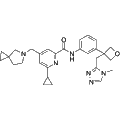
Cbl-b-IN-1 is a potent inhibitor of Cbl-b, exhibiting an IC50 of less than 100 nM. This compound promotes the secretion of key cytokines, including IL-2, IFN-γ, and TNF-α, thereby facilitating T cell activation and enhancing T cell receptor (TCR) signaling. Cbl-b-IN-1 is a valuable tool for research in immunomodulation and T cell biology.
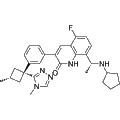
Cbl-b-IN-29 is a potent inhibitor targeting CBL-B, an E3 ubiquitin ligase involved in immune regulation. This orally active compound effectively promotes IL-2 release in Jurkat cells with an EC50 value of 159 nM, thereby enhancing immune response. Cbl-b-IN-29 has demonstrated significant anti-tumor efficacy in vivo, with favorable tolerability and no reported adverse effects. Its applications include cancer immunotherapy and combination studies in colorectal cancer and immune-oncology research.
Out of stock
All 3 sizes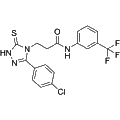
DCN1-IN-2 is a selective inhibitor of DCN1, exhibiting an IC50 value of 2.96 nM. This compound has demonstrated the ability to mitigate Ang II/TGFβ-induced activation of cardiac fibroblasts and reduce isoproterenol-induced cardiac fibrosis and remodeling in murine models. Its mechanism of action primarily involves the selective inhibition of cullin 3, making it a valuable tool for investigating cardiovascular diseases and potential therapeutic interventions.
Out of stock
All 3 sizes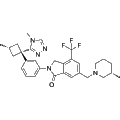
Synonyms: Cbl-b-IN-3
NX-1607 is a potent inhibitor of Cbl-b, an E3 ubiquitin ligase involved in the ubiquitin-proteasome degradation pathway, demonstrating an IC50 value of less than 1 nM. This compound is valuable for cancer research, as Cbl-b plays a critical role in regulating immune responses and has implications in tumor immune evasion. NX-1607 can be utilized in studies aimed at understanding immune modulation and the development of immunotherapeutic strategies.
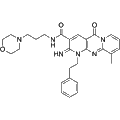
SPOP-IN-6b is an inhibitor of the speckle-type POZ protein (SPOP) with an IC50 value of 3.58 μM. This compound modulates SPOP activity, highlighting its potential in the study of ubiquitin-mediated degradation processes. Research applications include investigating SPOP's role in various biological pathways and its implications in diseases associated with protein misfolding and degradation dysfunction.
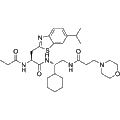
DI-591 is a high-affinity inhibitor targeting the interaction between DCN1 and UBC12. It demonstrates selective inhibition of the neddylation of cullin 3, with Ki values of 12 nM and 10.4 nM for binding to DCN1 and DCN2, respectively, while showing minimal binding to DCN3, DCN4, and DCN5. This compound is valuable for research focused on cullin-RING ligases and their regulatory pathways, enabling studies on protein neddylation and related cellular processes.