- Cat. No.
- A10469
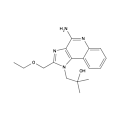
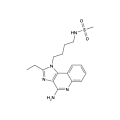
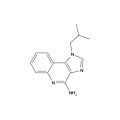
Imiquimod
Synonyms: Aldara
Imiquimod (Aldara) is a a heterocyclic imidazoquinoline amide that acts as an immune response modifier.
Search by product name, CAS, target or catalog number. Press Down Arrow to reach product suggestions, Tab to move between links, and Escape to close suggestions.
Toll-like receptor (TLR) agonists and inhibitors act on pattern recognition receptors of the innate immune system. A human homologue of the Drosophila Toll protein was shown in 1997 to signal activation of adaptive immunity. Each TLR recognizes particular microbial molecules, and mutations in mouse Tlr4 identified TLR4 as essential for lipopolysaccharide (LPS) signaling. The imidazoquinolines imiquimod and resiquimod activate immune cells through TLR7 and the adaptor myeloid differentiation primary response 88 (MyD88). Further agonists include GS-9620 for TLR7 and VTX-2337 for TLR8. Resatorvid and TLR2-IN-C29 inhibit TLR4 and TLR2 signaling, respectively, for studies of inflammation and host defense.
Synonyms: Aldara
Imiquimod (Aldara) is a a heterocyclic imidazoquinoline amide that acts as an immune response modifier.
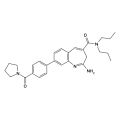
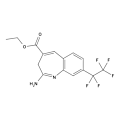
GS-9620 is a potent and selective orally active small molecule agonist of Toll-like receptor 7.
Synonyms: C29
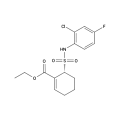
TLR2-IN-C29 is an inhibitor of TLR2/1 and TLR2/6 signaling.
VTX-2337 is a small-molecule Toll-like receptor 8 (TLR8) agonist with potential immunostimulating and antineoplastic activities.
Synonyms: R848; S28463
Resiquimod is an immune response modifier that acts as a potent TLR 7/8 agonist. Phase 2.
Synonyms: TAK-242; CLI-095
Resatorvid (TAK-242) is a selective Toll-like receptor 4 (TLR4) inhibitor and plays pivotal role in various inflammatory diseases.
Synonyms: 3M-852A
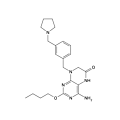
PF-4878691 (3M-852A) is a potent, orally active, and selective Toll-like receptor 7 (TLR7) agonist modelled to dissociate its antiviral and inflammatory activities.
Synonyms: GIT 27
VGX-1027 displays immunomodulatory and anti-inflammatory activities by inhibiting toll-like receptor 4 (TLR4) signaling.
Synonyms: CL087; SM360320
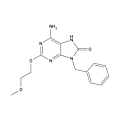
Toll-Like Receptor 7 Ligand II is a cell-permeable hydroxyadenine compound which acts as a potent and highly specific TLR7 (toll-like receptor 7) agonist without any detectable activity towards TLR2/3/5/8/9. It is shown to be 10-times more potent than R848 in stimulating the production of TLR7-dependent cytokines in cultures in vitro .
MD2-IN-1 is an inhibitor of Myeloid differentiation protein 2 (MD2) with a KD of 189 μM for the recombinant human MD2 (rhMD2).
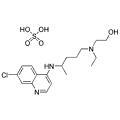
Hydroxychloroquine Sulfate is an antimalarial agent used for the treatment of systemic lupus erythematosus, rheumatoid arthritis and other autoimmune, inflammatory and dermatologic conditions. Also acts as an inhibitor of autophagy and toll-like receptor (TLR) 7/9.
Synonyms: 7-Thia-8-oxoguanosine; ANA 245; Immunosine; Immusine
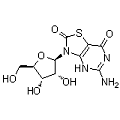
Isatoribine is a novel guanosine analogue showing immunostimulatory activity both in vivo and in vitro.
Synonyms: Resatorvid (S enantiomer); TAK242 (S enantiomer)
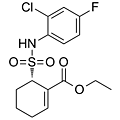
S enantiomer of TAK-242. TAK-242 (Resatorvid), a small-molecule inhibitor of Toll-like receptor (TLR) 4 signaling. TAK-242 is in treatment of sepsis and septic shock.
Toll-like receptors (TLRs) are a class of proteins that play a key role in the innate immune system.
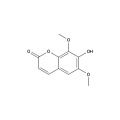
Isofraxidin is a coumarin compound derived from *Acanthopanax senticosus* that exhibits anti-invasive and anti-inflammatory properties. It inhibits MMP-7 expression and suppresses cell invasion in human hepatoma cells by reducing ERK1/2 phosphorylation. Isofraxidin also downregulates the expression of iNOS and COX-2 and inhibits the formation of the TLR4/myeloid differentiation protein-2 (MD-2) complex.
TLR7-agonist-2 is a potent and selective Toll-like Receptor 7 (TLR7) agonist with a LEC of 0.4 μM.
Synonyms: Gardiquimod trifluoroacetate
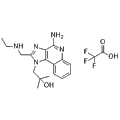
Gardiquimod is a chemical compound which acts selectively at both mouse and human forms of toll-like receptor 7 (TLR7). It functions as an immune response modifier. CAS: 1159840-61-5 (TFA) 1020412-43-4 (free base)
Synonyms: E 6446
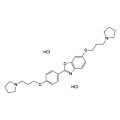
E6446 dihydrochloride is a robust antagonist for TLR7 and TLR9, with potential applications in studying harmful inflammatory responses. Additionally, it acts as a significant inhibitor of SCD1 with a KD of 4.61 μM. This compound can notably suppress adipogenic differentiation and liver lipogenesis via the SCD1-ATF3 pathway. Studies have indicated that E6446 dihydrochloride can enhance liver pathology in mice on a high-fat diet, making it a potential candidate for researching non-alcoholic fatty liver disease (NAFLD).
MD2-TLR4-IN-1 (compound 22m) is an inhibitor of myeloid differentiation protein 2/toll-like receptor 4 (MD2-TLR4) complex, inhibiting lipopolysaccharides (LPS)-induced expression of tumor necrosis factor alpha (TNF-α) and interleukin-6 (IL-6) in macrophages with IC50 values of 0.89 μM and 0.53 μM, respectively.
IAXO-102 is a TLR4 antagonist which negatively regulates TLR4 signalling. It inhibits MAPK and p65 NF-κB phosphorylation and expression of TLR4 dependent proinflammatory protein.
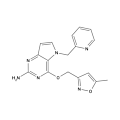
TLR7 agonist 1 is a potent, selective and oral TLR7 agonist with an IC50 of 90 nM.
CU-CPT9b is a specific TLR8 antagonist, with an IC50 of 0.7 nM. CU-CPT9b shows high binding affinity towards TLR8 with a Kd of 21 nM.
Synonyms: TLR8-specific antagonist
CU-CPT-8m is a specific TLR8 antagonist, with an IC50 of 67 nM.
CU-CPT17e is a potent multi-Toll-like receptor (TLR) agonist that activates TLR3, TLR8, and TLR9.
CU-CPT-9a is a specific TLR8 antagonist, with an IC50 of 0.5 nM.