- Cat. No.
- A10408
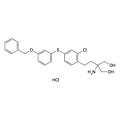
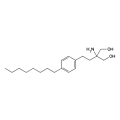
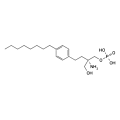
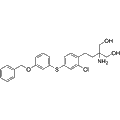
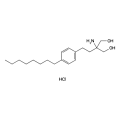
FTY720 (Fingolimod)
Synonyms: Gilenia
FTY720 is a derivative of ISP-1 (myriocin), a fungal metabolite of the Chinese herb Iscaria sinclarii as well as a structural analog of sphingosine.
Search by product name, CAS, target or catalog number. Press Down Arrow to reach product suggestions, Tab to move between links, and Escape to close suggestions.
Sphingosine-1-phosphate (S1P) receptor modulators act on S1PR1 to S1PR5, five G protein-coupled lipid receptors. In 1998 S1P was identified as a ligand of the orphan receptor endothelial differentiation gene 1 (EDG-1), now called S1PR1. FTY720 (fingolimod) was shown in 2002 to be phosphorylated in vivo and to act on four of the five S1P receptors. Two years later, lymphocyte egress from thymus and lymph nodes was found to depend on S1PR1. Ozanimod, BAF312 and ponesimod are further S1PR1-directed modulators, CYM 5442 HCl is a selective S1PR1 agonist and TY-52156 blocks S1PR3. Opaganib inhibits sphingosine kinase 2 (SphK2) and so limits S1P synthesis upstream of the receptors.
Synonyms: Gilenia
FTY720 is a derivative of ISP-1 (myriocin), a fungal metabolite of the Chinese herb Iscaria sinclarii as well as a structural analog of sphingosine.
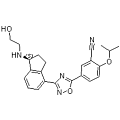
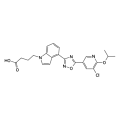
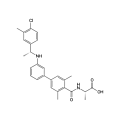
Synonyms: RPC-1063
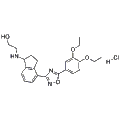
RPC1063 is a selective sphingosine 1 phosphate receptor modulators and methods which may be useful in the treatment of S1P1-associated diseases.
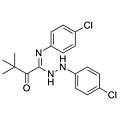
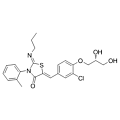
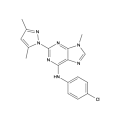
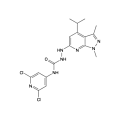
TY-52156 is a potent and selective S1P3 receptor antagonist with a Ki value of 110 nM.
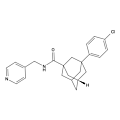
Synonyms: ABC-294640
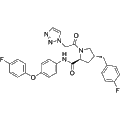
ABC294640 is an orally available, aryladamantane compound and selective inhibitor of sphingosine kinase-2 (SK2) with potential antineoplastic activity.
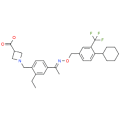
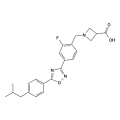
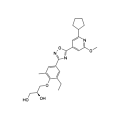
Synonyms: Siponimod
BAF312 is a next-generation potent sphingosine 1-phosphate (S1P) receptor agonist, selective for S1P1 and S1P5.
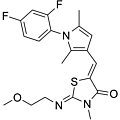
Synonyms: ACT-128800
Ponesimod is an orally active, selective sphingosine-1-phosphate receptor 1 (S1P1) immunomodulator with EC50 of 5.7 nM.
KRP-203 is a selective Sphingosine-1-phosphate receptor agonist. It shows to reduce peripheral lymphocyte infiltration and to prolong survival in rat transplant models.
Synonyms: CYM5442
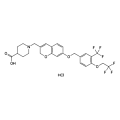
CYM 5442 HCl is a potent and selective EDG-1 (S1P1) agonist in vitro (EC50 = 1.35 nM).
XL541 is a selective antagonist of the sphingosine-1-phosphate receptor 1 (S1P1), effectively inhibiting GDP-GTP exchange. This compound has been shown to induce significant surface hemorrhaging in tumors, highlighting its potential as a therapeutic agent. Additionally, XL541 demonstrates enhanced antitumor activity when used in combination with Paclitaxel, making it a valuable tool for research in breast and lung cancer therapies.
Out of stock
All 3 sizes
Synonyms: AK174154
NS13001 is a selective SK2/3 modulator that acts as a potential therapeutic agent for treatment of SCA2 and possibly other cerebellar ataxias.
Synonyms: FTY720 (free base)
Fingolimod is a sphingosine 1-phosphate (S1P) antagonist with IC50 of 0.033 nM in K562 and NK cells. Fingolimod also is a pak1 activator, a immunosuppressant.
ASP1126 is a selective and orally active sphingosine-1-phosphate (S1P) agonist, with EC50 values of 7.12 nM, 517 nM for hS1P1 and hS1P3, respectively.
ASP-4058 is a next-generation, selective and oral bioactive agonist for Sphingosine 1-Phosphate receptors 1 and 5 (S1P1 and S1P5), ameliorates rodent experimental autoimmune encephalomyelitis with a favorable safety profile.
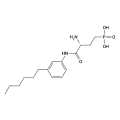
VPC 23019, an aryl amide-containing Sphingosine 1-phosphate (S1P) analog, is a competitive antagonist at the S1P1 and S1P3 receptors (pKi= 7.86 and 5.93, respectively) and an agonist at the S1P4 and S1P5 receptors (pEC50= 6.58 and 7.07, respectively).
S1p receptor agonist 1 is an S1P receptor agonist extracted from patent WO 2015039587 A1, compound example 2.
Synonyms: ML249
CYM-5541 (ML249) is an selective and allosteric S1P3 receptor agonist with an EC50 between 72 and 132 nM.
W146 is a selective antagonist of sphingosine-1-phosphate receptor 1 (S1PR1) with an EC50 value of 398 nM.
GSK2018682 is an agonist for S1P1 and S1P5 receptor with pEC50s of 7.7 and 7.2, respectively, and has no agonist activity towards human S1P2, S1P3, or S1P4. GSK2018682 is used in the research of multiple sclerosis.
Synonyms: ACT-334441
Cenerimod (ACT-334441) is a potent and orally available sphingosine 1-phosphate 1 receptor (S1P1) agonist extracted from patent WO 2016184939 A1 and WO 2011007324 A1, example 1, with an EC50 of 2.7 nM.
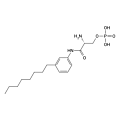
Synonyms: (S)-FTY720P; (S)-FTY720 phosphate
FTY720 (S)-Phosphate is an agonist of S1P receptor 1 (S1PR1), used in the research of acute inflammatory diseases such as acute lung injury.
Synonyms: ML248
CYM50308 (ML248) is a potent, selective and high affinity sphingosine-1-phosphate receptor 4 (S1P4-R) agonist with an EC50 of 56 nM.
NIBR-0213 is a potent and selective antagonist of S1P(1) with efficacy in experimental autoimmune encephalomyelitis.
JTE-013 is a potent and specific S1P2 (Sphingosine-1-Phosphate 2; EDG-5) antagonist. JTE-013 inhibits the specific binding of radiolabeled S1P to human and rat S1P2 with IC50s of 17 nM and 22 nM, respectively.
Synonyms: KRP-203 free base
Mocravimod is a sphingosine-1-phosphate receptor (S1PR) modulator that inhibits the signaling necessary for T cell egress from lymph nodes and other lymphoid tissues. It preferentially binds to S1PR1, exhibiting beneficial effects such as a reduction in reactive oxygen species (ROS) levels, prevention of mitochondrial permeability transition pore opening, and enhancement of mitochondrial membrane potential (MMP). Additionally, Mocravimod promotes the phosphorylation of key signaling proteins including AKT, ERK, GSK-3β, JAK2, and STAT3, while preserving T cell effector function. This reagent is suitable for research into acute myelogenous leukemia, diabetes, and myocardial ischemia-reperfusion injury.
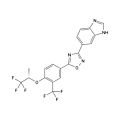
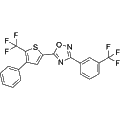
SEW2871 is a potent and highly selective agonist of the sphingosine-1-phosphate type 1 receptor (S1P1), exhibiting an EC50 of 13.8 nM. This compound activates critical signaling pathways, including ERK, Akt, and Rac, and facilitates S1P1 internalization and recycling. SEW2871 effectively reduces lymphocyte populations in the bloodstream and shows promise for the study of various conditions, such as diabetes, Alzheimer’s disease, liver fibrosis, and inflammatory responses.