- Cat. No.
- A10986
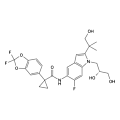
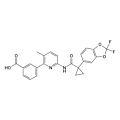
Lumacaftor (VX-809)
Synonyms: VX809
VX-809 is the second investigational oral candidate compound for the treatment of cystic fibrosis (CF).
Search by product name, CAS, target or catalog number. Press Down Arrow to reach product suggestions, Tab to move between links, and Escape to close suggestions.
Cystic fibrosis transmembrane conductance regulator (CFTR) modulators act on an epithelial chloride channel. The CFTR gene was cloned in 1989, and its most common disease-associated variant deletes phenylalanine 508 (F508del). Potentiators raise the open probability of the channel, as reported in 2009 for ivacaftor under the code VX-770. Correctors such as lumacaftor and VX-661 improve folding and trafficking of F508del-CFTR to the plasma membrane. Inhibitors serve to probe channel function, among them CFTRinh-172, a thiazolidinone described in 2002, and the quinoxalinedione PPQ-102. Ataluren promotes readthrough of premature stop codons and is used with nonsense variants of the gene. Other chloride-conducting proteins are listed under the sibling category Chloride Channels.
Synonyms: VX809
VX-809 is the second investigational oral candidate compound for the treatment of cystic fibrosis (CF).
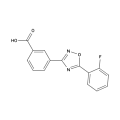
Synonyms: PTC124
PTC124 also known as Ataluren is CFTR-G542X nonsense allele inhibitor.
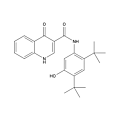
Synonyms: Kalydeco; VX770
VX-770 (Ivacaftor) is known as a CFTR potentiator.
VX-661 is another cystic fibrosis transmembrane conductance regulator (CFTR) corrector in development for the treatment of cystic fibrosis.
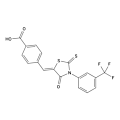
Synonyms: CFTR inhibitor 172
CFTRinh-172 is a voltage-independent, selective CFTR inhibitor
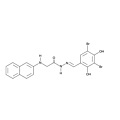
Synonyms: GlyH-101; Cystic Fibrosis Transmembrane Conductance; Regulator Inhibitor II
CFTR inhibitor II, also known as GlyH-101, is a glycine hydrazide that selectively and reversibly blocks the CFTR channel (Ki = 4.3 uM).
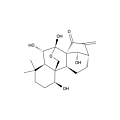
Synonyms: Isodonol
Oridonin (Isodonol), an entkaurane diterpenoid isolated from Rabdosia rubescens, is an important traditional Chinese herbal remedy.
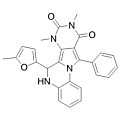
PPQ-102 is a compound that targets intracellular nucleotide binding domain(s) of CFTR and inhibits CFTR- mediated chloride current in a voltage-dependent and reversible manner.
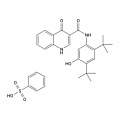
Synonyms: VX-770 benzenesulfonate
Ivacaftor benzenesulfonate is an orally bioavailable CFTR potentiator, used for cystic fibrosis treatment.
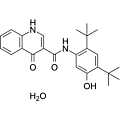
Synonyms: VX-770 hydrate
Ivacaftor hydrate is an orally bioavailable CFTR potentiator, used for cystic fibrosis treatment.
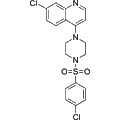
KM 11060 corrects F508del-CFTR trafficking, increasing the amount of functional CFTR at the plasma membrane (~75%) and Inhibits PDE5 activity
PG 01 is a cystic fibrosis transmembrane conductance regulator (CFTR) potentiator. PG 01 is effective on G970R although with a significant decrease in potency relative to E193K and δF508.
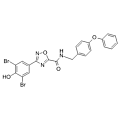
CFTR corrector 2 is a cystic fibrosis transmembrane conductance corrector (CFTR), extracted from patent US20140274933.
GLPG2451 is a cystic fibrosis transmembrane conductance regulator (CFTR) potentiator, which effectively potentiates low temperature rescued F508del CFTR with an EC50 of 11.1 nM.
Synonyms: ABBV-974
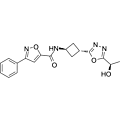
GLPG1837 is a potent and reversible CFTR potentiator, with EC50s of 3 nM and 339 nM for F508del and G551D CFTR, respectively.
Synonyms: VX-445; VX445??
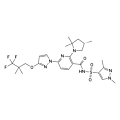
Elexacaftor (VX-445, Compound 1) is a modulator of cystic fibrosis transmembrane conductance regulator (CFTR).
PTI-428 is a specific cystic fibrosis transmembrane conductance regulator (CFTR) amplifier.
Synonyms: BPO27
(R)-BPO-27 is a potent CFTR inhibitor with an IC50 of 4 nM.
Out of stock
All 5 sizes
5,7,4'-Trimethoxyflavone is isolated from Kaempferia parviflora (KP) that is a famous medicinal plant from Thailand. 5,7,4'-Trimethoxyflavone induces apoptosis, as evidenced by increments of sub-G1 phase, DNA fragmentation, annexin-V/PI staining, the Bax/Bcl-xL ratio, proteolytic activation of caspase-3, and degradation of poly (ADP-ribose) polymerase (PARP) protein.5,7,4'-Trimethoxyflavone is significantly effective at inhibiting proliferation of SNU-16 human gastric cancer cells in a concentration dependent manner.
Synonyms: Glafenin
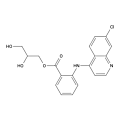
Glafenine is a non-selective, non-steroidal anti-inflammatory drug (NSAID) that inhibits both COX-1 and COX-2 enzymes. It exerts anti-inflammatory, anti-proliferative, and anti-migratory effects by suppressing the arachidonic acid metabolic pathway, thereby reducing prostaglandin production. Additionally, glafenine induces cell cycle arrest in vascular smooth muscle cells and endothelial cells and decreases the synthesis of the extracellular matrix protein tenascin. It is utilized in research related to inflammatory disorders, vascular restenosis, and cystic fibrosis.
Synonyms: RP107
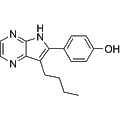
Aloisine A is a potent cyclin-dependent kinase (CDK) inhibitor, exhibiting IC50 values of 0.15 μM for CDK1/cyclin B, 0.12 μM for CDK2/cyclin A, 0.4 μM for CDK2/cyclin E, and 0.16 μM for CDK5/p35. In addition to its CDK inhibitory effects, Aloisine A also inhibits GSK-3α and GSK-3β with IC50 values of 0.5 μM and 1.5 μM, respectively. Notably, it enhances the activity of wild-type and mutant CFTR with submicromolar affinity through a cAMP-independent mechanism, making it a valuable tool for research related to cystic fibrosis and CFTR-related disorders.
H2-Gamendazole, a derivative of Lonidamine, targets the cystic fibrosis transmembrane conductance regulator (CFTR). It demonstrates significant efficacy in reducing cyst formation in polycystic kidney disease models. This compound is primarily used in research related to autosomal dominant polycystic kidney disease, contributing to a better understanding of therapeutic strategies for this condition.
Synonyms: VX-440
Olacaftor is a cystic fibrosis transmembrane conductance regulator (CFTR) modulator that enhances the function of the defective CFTR protein. It has been shown to improve chloride ion transport, leading to increased hydration of airway surfaces and improved pulmonary function. Olacaftor is primarily utilized in research focused on cystic fibrosis and the development of therapies aimed at restoring CFTR activity.